The global e-reader market continues to thrive, valued at
9.3billionin2025andprojectedtoreach16.7 billion by 2032 with a CAGR of 8.9%. This growth is fueled by rising demand for portable reading solutions, advancements in E Ink technology, increasing digital book consumption, and the popularity of eco-friendly reading alternatives. In 2026, Amazon’s Kindle dominates with 45% of global market share, while Rakuten Kobo holds 28%—driven by its open ecosystem and regional strengths in Europe and Asia. Key trends include color E Ink displays, AI-powered reading tools, sustainable design materials, and seamless library integration—with 73% of users prioritizing screen comfort and content accessibility over price.
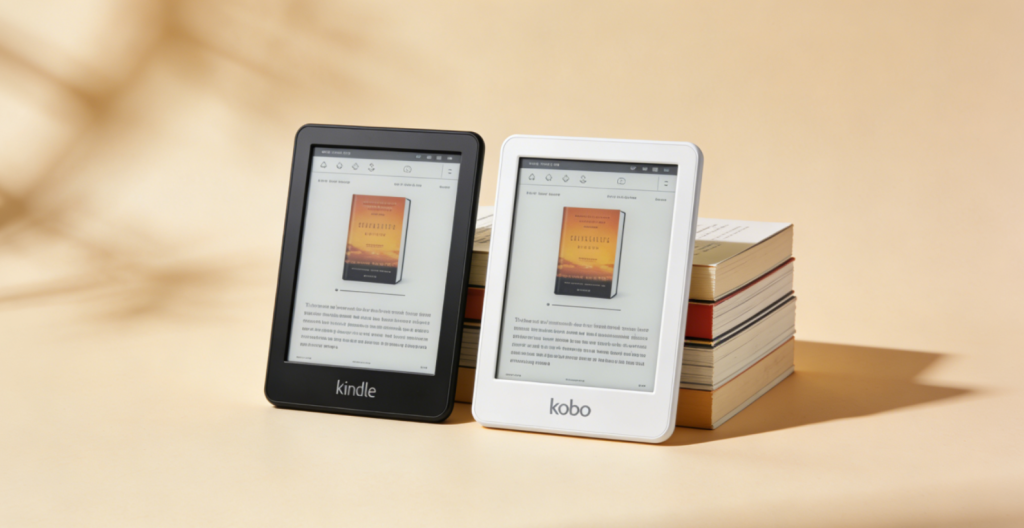
2026 marks a competitive year for e-readers: Kindle introduces the Paperwhite 6 with AI reading assistants, while Kobo launches the Libra 3 featuring Kaleido 3 color E Ink and 85% recycled plastic construction. Users face distinct tradeoffs: Kindle enthusiasts value its vast content library and ecosystem integration, while Kobo fans prioritize open file format support and customizable reading experiences. Below, we break down core technologies, top 2026 models, and tailored guidance to help you decide which e-reader aligns with your reading habits.
I. Core Technology: Key Differentiators & 2026 Innovations ⚙️
Kindle and Kobo redefine digital reading with distinct technological approaches, anchored by five critical areas—display systems, battery efficiency, ecosystem integration, design engineering, and accessibility features. Here’s how 2026’s offerings compare:
1. Display Technology: E Ink Evolution for Eye Comfort 🖼️
2026’s top e-readers feature advanced E Ink displays, but with key differences. Kindle models (Paperwhite 6, Oasis 4) use 6.8/7.8-inch Carta 1200 E Ink screens with 300/330 ppi resolution—delivering sharp text and 15% faster page turns than previous generations. The Paperwhite 6 introduces adjustable warm/cool lighting (24 levels) and “EyeCare Mode,” which syncs with your circadian rhythm to reduce sleep disruption—perfect for night owls. Kobo leads in color innovation: the Libra 3 and Elipsa 3 use Kaleido 3 color E Ink (4096 colors, 160 ppi) for vibrant comics, magazines, and illustrated books, while monochrome models (Clara 3E) retain 300 ppi clarity with ComfortLight PRO—auto-adjusting brightness and color temperature based on ambient light. Both brands offer anti-glare coatings, but Kobo’s displays support 180° rotation for left/right-handed use—a handy feature missing from Kindle.
2. Battery Efficiency: Long-Lasting Reading Power ⚡
Battery life remains a cornerstone of e-reader appeal, with both brands delivering weeks of use on a single charge. Kindle models offer 6-8 weeks of use (30 minutes of daily reading, WiFi off), with the Oasis 4 boasting 8 weeks thanks to low-power processor optimization. Fast USB-C charging (2 hours for a full charge) is standard across the lineup. Kobo matches or exceeds this: the Libra 3 offers 7 weeks of use, while the Clara 3E extends to an industry-leading 9 weeks—leveraging energy-efficient E Ink Carta 1200 and smart power management. Unique to Kobo, select models (Elipsa 3) support Qi wireless charging for cable-free top-ups, a feature not available on Kindle. Both brands include battery-saving modes that reduce standby power consumption by 30%, ensuring your e-reader stays ready for impromptu reading sessions.
3. Ecosystem & Content Access: Closed vs. Open Systems 📖
The most significant difference between Kindle and Kobo is found in their respective ecosystems, a factor that should heavily influence your choice depending on how you acquire books.
Kindle functions within a closed system, centered around Amazon’s expansive Kindle Store, which hosts over 7 million titles. Additionally, Kindle Unlimited offers access to more than 2 million books for a monthly fee of $9.99. The platform’s seamless integration with Amazon Prime Reading and Audible, allowing for easy audiobook pairing, makes it a top choice for users already entrenched in Amazon’s ecosystem. However, this comes with a notable limitation: Kindle devices natively support only Amazon’s proprietary formats, such as AZW3, KFX, and MOBI, all of which are DRM-protected. As a result, converting EPUB files—the most widely used open format—becomes a necessary but often cumbersome step for users.
In contrast, Kobo champions an open ecosystem. It supports a diverse range of formats, including EPUB, PDF, MOBI, and CBZ, all of which are DRM-free. This flexibility makes it an excellent option for borrowing from public libraries via platforms like OverDrive or Libby. Kobo Plus, priced at $7.99 per month, provides access to 1.8 million titles, while the integration with Google Play Books adds an additional 5 million+ titles to the mix. For readers who own DRM-free content or frequently borrow books from libraries, Kobo offers unparalleled versatility and convenience.
4. Design & Durability: Ergonomics & Sustainability 🌱
2026 designs reflect contrasting priorities: premium build (Kindle) vs. eco-friendly ergonomics (Kobo). Kindle models (Paperwhite 6, Oasis 4) feature sleek aluminum frames, IPX8 waterproofing (2m depth for 60 minutes), and lightweight builds (191-240g). The Oasis 4 retains its signature ergonomic grip and physical page-turn buttons, while the Paperwhite 6 adds a flush-front design for easier cleaning—perfect for beach or bath reading. Kobo leads in sustainability: the Clara 3E uses 85% recycled plastic (10% from ocean-bound waste) and 100% recyclable packaging. All Kobo models include IPX8 waterproofing, physical page-turn buttons, and 4-axis screen rotation for versatile holding positions (great for reading in bed or on the go). The Libra 3 (198g) and Clara 3E (171g) are lighter than Kindle’s Paperwhite 6 (205g), reducing hand fatigue during extended reading sessions.
5. Smart Features & Accessibility: Enhanced Reading Experiences 🧠
2026 brings AI and accessibility upgrades to both brands, tailored to different user needs. Kindle introduces “Reading Assistant AI” on the Paperwhite 6 and Oasis 4—offering real-time vocabulary explanations, chapter summaries, and personalized reading recommendations. It supports VoiceView screen reader, adjustable font sizes (up to 500%), and dark mode for low-light reading—ideal for language learners and visually impaired users. Kobo counters with “Comprehension Tools”—AI-powered note-taking, citation generation, and natural-sounding text-to-speech. Kobo’s accessibility features include screen magnification, dyslexia-friendly fonts, and customizable text spacing. Unique to Kobo, the Elipsa 3 supports stylus input for handwritten notes on PDFs and e-books—a feature only available on Kindle’s high-end Scribe model.
II. Top 2026 E-Readers: Kindle vs. Kobo Showdown 🏆
A. Best Overall: Premium Reading Experience 🥇
1. Kindle Paperwhite 6 (Kindle’s Top Pick) ✨
- Specs: 6.8-inch Carta 1200 E Ink (300 ppi), IPX8 waterproof, 16GB/32GB storage, 205g weight, 6-week battery life, USB-C charging, Reading Assistant AI.
- Key Features: Adjustable warm/cool lighting, Audible integration, Kindle Unlimited compatibility, 3-year warranty.
- Price: 229.99 (32GB).
- Pros: Vast content library (7 million+ titles), sharp glare-free display, seamless Amazon ecosystem integration, reliable battery, durable aluminum build.
- Cons: Closed format support (no native EPUB), no color option, heavier than Kobo alternatives.
- Best For: Avid readers invested in Amazon’s ecosystem, Audible users, and those prioritizing content variety over format flexibility.
2. Kobo Libra 3 (Kobo’s Top Pick) 🌟
- Specs: 7-inch Kaleido 3 color E Ink (300 ppi monochrome / 160 ppi color), IPX8 waterproof, 16GB/32GB storage, 198g weight, 7-week battery life, USB-C + Qi wireless charging.
- Key Features: ComfortLight PRO, 4-axis rotation, physical page-turn buttons, open format support (EPUB/PDF), 2-year warranty.
- Price: 249.99 (32GB).
- Pros: Color display for comics/illustrations, lightweight ergonomic design, eco-friendly materials, seamless library integration.
- Cons: Smaller content library than Kindle, color resolution lower than monochrome, pricier than base Kindle models.
- Best For: Readers who value format flexibility, color content, sustainable design, and frequent library borrowing.
B. Best Value: Budget-Friendly Excellence 💎
1. Kindle Paperwhite 6 (8GB) (Kindle Value Pick) 🎯
- Specs: 6.8-inch Carta 1200 E Ink (300 ppi), IPX8 waterproof, 8GB storage, 202g weight, 6-week battery life, USB-C charging.
- Key Features: Basic Reading Assistant tools, adjustable lighting, Audible compatibility, 2-year warranty.
- Price: $179.99.
- Pros: Affordable entry to Kindle’s ecosystem, core premium features (waterproofing, high-res display), excellent battery life.
- Cons: Limited storage (holds ~4,000 e-books), no color, closed format support.
- Best For: Budget-conscious readers who want Amazon’s content library without premium frills.
2. Kobo Clara 3E (Kobo Value Pick) 💰
- Specs: 6-inch Carta 1200 E Ink (300 ppi), IPX8 waterproof, 8GB/16GB storage, 171g weight, 9-week battery life, USB-C charging.
- Key Features: ComfortLight PRO, 85% recycled plastic build, open format support, library integration, 2-year warranty.
- Price: 169.99 (16GB).
- Pros: Ultra-lightweight (reduces hand fatigue), industry-leading battery life (months of use), eco-friendly design, affordable price, native EPUB support.
- Cons: No color display, smaller screen than Paperwhite, fewer smart features.
- Best For: Casual readers, students, and eco-conscious buyers seeking portability and format flexibility on a budget.
C. Best for Note-Taking & Productivity 📝
1. Kindle Scribe 2 (Kindle Productivity Pick) ✨
- Specs: 10.2-inch Carta 1200 E Ink (300 ppi), IPX8 waterproof, 32GB/64GB storage, 345g weight, 4-week battery life, USB-C charging, stylus included.
- Key Features: AI-powered note organization, PDF annotation, adjustable pen pressure, Reading Assistant AI, 3-year warranty.
- Price: 399.99 (64GB).
- Pros: Large display for textbooks/documents, precise stylus input, seamless Amazon ecosystem integration, durable build.
- Cons: Heavy for portable reading, expensive, closed format support, shorter battery life.
- Best For: Professionals, students, and researchers who need to annotate PDFs and take structured notes alongside reading.
2. Kobo Elipsa 3 (Kobo Productivity Pick) 🌟
- Specs: 10.3-inch Carta 1200 E Ink (300 ppi), IPX8 waterproof, 32GB/64GB storage, 315g weight, 5-week battery life, USB-C + Qi wireless charging, stylus included.
- Key Features: Handwritten note conversion to text, PDF annotation, open format support, ComfortLight PRO, 2-year warranty.
- Price: 379.99 (64GB).
- Pros: Lighter than Kindle Scribe 2 (easier to carry in backpacks), open format support for diverse documents (EPUB/PDF/CBZ), wireless charging, eco-friendly materials.
- Cons: Smaller content library, stylus pressure sensitivity limited to 4 levels, no AI note organization.
- Best For: Professionals and students who work with DRM-free PDFs/EPUBs and value portability with flexible note-taking.
D. Best for Color Content: Comics, Magazines & Illustrations 🎨
1. Kobo Libra 3 Color (Kobo Color Pick) 🌈
- Specs: 7-inch Kaleido 3 color E Ink (4096 colors, 160 ppi), IPX8 waterproof, 32GB storage, 198g weight, 6-week battery life, USB-C + Qi wireless charging.
- Key Features: Color optimization for comics/magazines, 4-axis rotation, physical page-turn buttons, open format support, 2-year warranty.
- Price: $249.99.
- Pros: Vibrant color display (brings illustrations to life), lightweight design, eco-friendly build, library integration for color content.
- Cons: Color resolution lower than monochrome, pricier, shorter battery life in color mode (reduced by ~20%).
- Best For: Comic book fans, magazine readers, and those who enjoy illustrated books in color.
2. Kindle Oasis 4 (Kindle Color Alternative) 🖤
- Specs: 7.8-inch Carta 1200 E Ink (330 ppi), IPX8 waterproof, 32GB/64GB storage, 240g weight, 8-week battery life, USB-C charging, Reading Assistant AI.
- Key Features: High-res monochrome display, adjustable warm/cool lighting, ergonomic grip, Audible integration, 3-year warranty.
- Price: 349.99 (64GB).
- Pros: Sharpest Kindle display (330 ppi), longest battery life, premium build quality, seamless Amazon content integration.
- Cons: No color support, expensive, heavier than Kobo Libra 3.
- Best For: Kindle ecosystem users who prioritize sharp monochrome display for text-heavy content and occasional black-and-white illustrated books.
III. Scenario-Based Recommendations 🎭
1. Commuter Readers (Daily Transit & Travel) ✈️
- Kindle Pick: Kindle Paperwhite 6 (16GB) + Kindle Unlimited Subscription + Protective Case
- Why: Compact size fits in purses/bags, IPX8 waterproofing handles spills/rain, 6-week battery avoids frequent charging. Kindle Unlimited provides access to thousands of books for commutes, and Audible integration lets you switch to audiobooks during noisy transit (e.g., buses/trains).
- Kobo Pick: Kobo Clara 3E (16GB) + Libby App (Library Borrowing) + Slim Case
- Why: Ultra-lightweight (171g) for extended holding, 9-week battery lasts months of commutes, open format support lets you borrow EPUBs from public libraries for free (no subscription needed). Eco-friendly design aligns with sustainable commuting habits.
2. Students (Textbooks & Study Notes) 🎓
- Kindle Pick: Kindle Scribe 2 (64GB) + Amazon Textbooks Subscription + Stylus Case
- Why: Large 10.2-inch display fits textbooks without zooming, stylus supports detailed annotations/highlighting, AI note organization helps categorize study materials. Seamless integration with Amazon’s textbook library and Reading Assistant AI aids comprehension of complex topics.
- Kobo Pick: Kobo Elipsa 3 (64GB) + Zotero Integration (Research Management) + Protective Sleeve
- Why: Open format support works with DRM-free textbooks (EPUB/PDF) from university libraries, lighter than Kindle Scribe 2 (easier to carry in backpacks), handwritten note conversion to text simplifies sharing notes with classmates. Wireless charging tops up quickly between classes.
3. Professional Readers (Research & Documents) 💼
- Kindle Pick: Kindle Oasis 4 (64GB) + Audible Premium + Leather Case
- Why: High-res 7.8-inch display reads small text in research papers/reports, long 8-week battery lasts through conferences, Audible integration lets you listen to documents during commutes. Premium aluminum build fits professional settings (e.g., client meetings, offices).
- Kobo Pick: Kobo Elipsa 3 (64GB) + Google Drive Integration + Folio Case
- Why: Open format support works with diverse work documents (EPUB/PDF/CBZ), wireless charging is convenient for desks (no cable clutter), eco-friendly materials align with corporate sustainability goals. Stylus note-taking simplifies meeting summaries and action items.
4. Casual Readers (Leisure & Library Borrowing) 🛋️
- Kindle Pick: Kindle Paperwhite 6 (8GB) + Prime Reading + Basic Case
- Why: Affordable entry to Kindle’s vast library, Prime Reading offers free books for Prime members (no extra cost), IPX8 waterproofing works for bath/pool reading. 6-week battery requires minimal charging (perfect for casual use).
- Kobo Pick: Kobo Clara 3E (8GB) + Kobo Plus Subscription + Eco-Friendly Case
- Why: Ultra-lightweight for cozy reading (e.g., on couches/beds), 9-week battery lasts through multiple books, Kobo Plus ($7.99/month) is cheaper than Kindle Unlimited. Open format support lets you borrow from public libraries without conversion (save money on purchases).
5. Color Content Enthusiasts (Comics & Magazines) 🎉
- Top Pick: Kobo Libra 3 Color (32GB) + Comics Plus Subscription + Comic Book Case
- Why: Kaleido 3 color E Ink brings comics/magazines to life (4096 colors), 32GB storage holds thousands of issues, 4-axis rotation works for landscape/portrait reading (ideal for different comic formats). Open format support lets you import DRM-free comic collections (e.g., from Humble Bundle).
- Alternative: Kindle Paperwhite 6 (32GB) + ComiXology Unlimited + Protective Cover
- Why: ComiXology integration offers 40,000+ comics (the largest digital comic library), high-res monochrome display works for black-and-white titles, seamless Amazon ecosystem integration. IPX8 waterproofing protects during outdoor reading (e.g., park trips).
IV. How to Choose: Key Factors for Book Lovers 🛒
1. Define Your Content Needs
- Amazon Ecosystem User: Choose Kindle if you use Prime, Audible, or Kindle Unlimited—access to 7 million+ titles and seamless integration is unmatched.
- Library Borrower/DRM-Free Content Owner: Choose Kobo for native EPUB/PDF support—no conversion needed for library books or purchased DRM-free content.
- Color Content Fan: Kobo is the only option with Kaleido 3 color E Ink—ideal for comics, magazines, and illustrated books.
- Text-Heavy Reader: Both brands excel, but Kindle’s higher ppi (330 on Oasis 4) offers slightly sharper text for long reading sessions.
2. Evaluate Core Features
- Screen Size: 6-7 inches (Kindle Paperwhite 6, Kobo Clara 3E/Libra 3) for portability; 10+ inches (Kindle Scribe 2, Kobo Elipsa 3) for textbooks/documents.
- Battery Life: Kobo Clara 3E (9 weeks) > Kindle Oasis 4 (8 weeks) > Kobo Libra 3 (7 weeks) > Kindle Paperwhite 6 (6 weeks).
- Waterproofing: Both brands offer IPX8 waterproofing—safe for baths, pools, and beach reading (no need to worry about spills).
- Storage: 8GB (basic models) holds 4,000+ e-books; 32GB+ (premium models) is ideal for textbooks, comics, or offline storage (e.g., travel).
- Accessibility: Kindle has better screen reader integration (VoiceView); Kobo offers dyslexia-friendly fonts and customizable text spacing (better for readers with learning differences).
3. Set a Realistic Budget
- 200: Entry-level (Kindle Paperwhite 6 8GB, Kobo Clara 3E): Core features (waterproofing, high-res display), basic storage.
- 300: Mid-range (Kindle Paperwhite 6 32GB, Kobo Libra 3): Additional storage, color display (Kobo), smart features (AI tools).
- : Premium (Kindle Scribe 2, Kobo Elipsa 3): Large screens, stylus support, maximum storage, advanced productivity tools (note-taking/annotation).
4. Must-Have Features by Use Case
- All Users: Anti-glare E Ink display (easy on eyes), USB-C charging (universal cables), waterproofing (versatility), adjustable lighting (day/night reading).
- Commuters: Lightweight design (), long battery life (>6 weeks), compact size (fits in small bags).
- Students/Professionals: Note-taking stylus, PDF annotation, large storage (32GB+), open format support (Kobo for DRM-free content).
- Casual Readers: Affordability, library integration, easy setup, minimal learning curve (no complex features).
- Color Content Lovers: Kobo’s Kaleido 3 color E Ink, 32GB+ storage (for large comic/magazine files), comic/magazine optimization.
5. Avoid Common Mistakes
- Ignoring Format Compatibility: Kindle doesn’t support native EPUB—avoid if you own DRM-free EPUBs or borrow frequently from libraries (you’ll waste time converting files).
- Overlooking Battery Life: Color E Ink (Kobo) reduces battery life by 20-30%—choose monochrome if you prioritize long use between charges (e.g., travel).
- Sacrificing Portability for Size: 10-inch models (Scribe 2, Elipsa 3) are great for documents but bulky for daily carry (e.g., commutes)—stick to 6-7 inch models for on-the-go reading.
- Forgetting Accessories: Invest in a protective case (prevents screen damage) and screen protector (reduces glare); add a stylus for note-taking models (essential for productivity).
- Overpaying for Features: Casual readers don’t need AI tools or color displays—stick to entry-level models (e.g., Kindle Paperwhite 6 8GB, Kobo Clara 3E) for better value.
Conclusion
2026’s e-reader showdown between Kindle and Kobo reveals two distinct philosophies: Kindle prioritizes ecosystem lock-in and content variety, while Kobo focuses on open flexibility and user-centric design. The Kindle Paperwhite 6 stands out for Amazon ecosystem users, offering unmatched content access, sharp displays, and seamless integration with Audible and Kindle Unlimited. The Kobo Libra 3 excels for readers who value format freedom, color content, and sustainable design—with library integration and eco-friendly materials that align with modern values.
For note-takers, the Kindle Scribe 2 leads with AI-powered productivity tools, while the Kobo Elipsa 3 offers lighter portability and open format support. Budget-conscious readers will appreciate the Kobo Clara 3E’s industry-leading battery life and affordability, while Kindle loyalists can’t go wrong with the entry-level Paperwhite 6 8GB.
The ultimate choice depends on your reading habits: if you prioritize content variety and Amazon integration, Kindle is the clear winner. If you value format flexibility, library borrowing, color content, or sustainability, Kobo takes the crown. Both brands deliver exceptional E Ink displays, long battery life, and waterproof designs—ensuring a comfortable, portable reading experience for book lovers worldwide.
Whether you’re diving into a novel on your commute, annotating research papers, or enjoying colorful comics, 2026’s e-readers offer tailored solutions to enhance your reading journey. By focusing on your content needs, budget, and preferred features, you’ll find the perfect companion to bring your favorite books wherever life takes you.
About the Author