The global compact camera market (encompassing mirrorless and point-and-shoot segments) is witnessing steady growth, valued at
7.2billionin2025andprojectedtoreach12.9 billion by 2032 with a CAGR of 8.5%. This expansion is driven by resurgent international travel, rising demand for high-quality content creation, advancements in compact imaging technology, and the need for lightweight alternatives to bulky DSLRs. In 2026, mirrorless cameras hold 58% of the compact camera market share, fueled by their balance of image quality and portability, while point-and-shoot models dominate the budget and ultra-portable segments (42% market share). Key players including Sony, Fujifilm, Canon, Panasonic, and Ricoh account for over 73% of global revenue, with a growing focus on AI-enhanced photography, durable designs, and extended battery life. Top trends include AI automatic composition, 4K video stabilization, weather-sealed bodies, and miniaturized sensor technology—with 76% of travel photographers prioritizing portability and ease of use over absolute image quality.
2026 marks a competitive year for compact cameras: Fujifilm’s X-T50 introduces AI scene optimization for travel landscapes, Ricoh’s GR IIIx 2026 Edition features a 26MP APS-C-class sensor in a pocket-sized body, and Canon’s PowerShot G7 X Mark V integrates 5-axis in-body stabilization for shake-free shots on the go. Users face distinct tradeoffs: photography enthusiasts prioritize interchangeable lenses and sensor size for versatile shooting, while casual travelers seek one-piece convenience and discretion to avoid drawing attention. Vloggers need flip screens and microphone support for content creation, and adventure travelers demand rugged, weather-resistant builds. Below, we break down core technologies, top 2026 models, and tailored guidance to help you choose the perfect compact camera for your travel adventures.
I. Core Technology: Key Differentiators & 2026 Innovations ⚙️
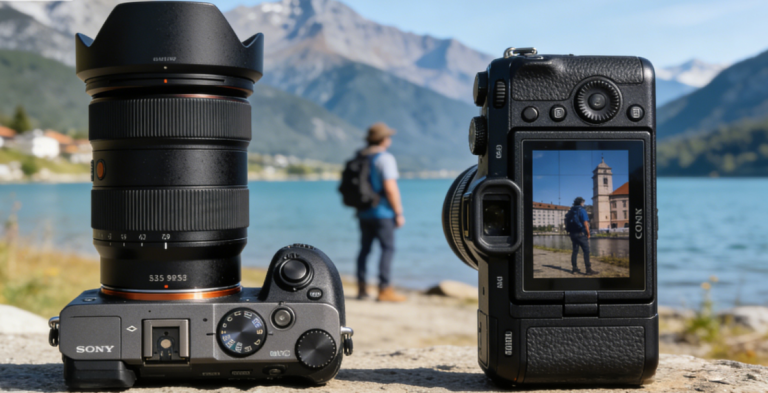
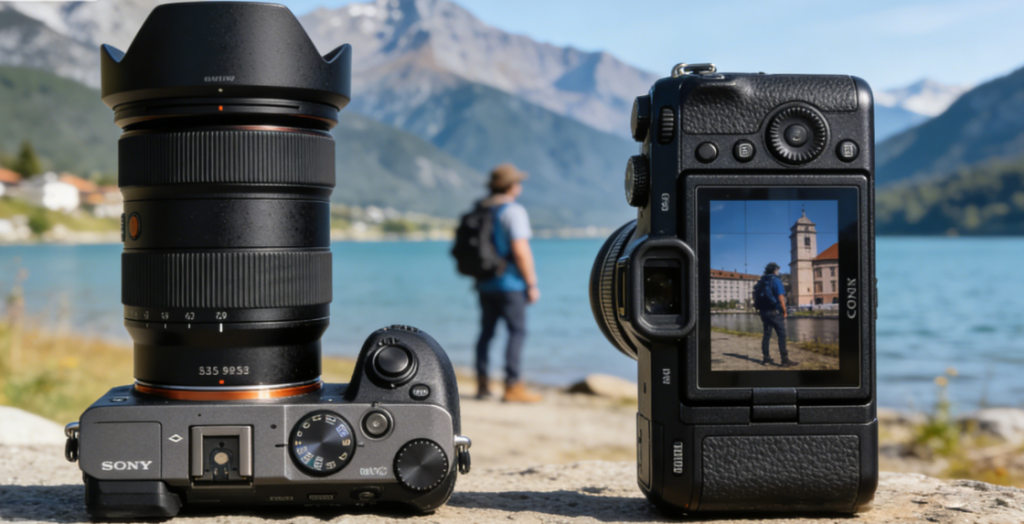
Mirrorless and point-and-shoot cameras redefine travel photography with distinct technological approaches, anchored by five critical areas—sensor performance, lens systems, autofocus capabilities, video features, and design practicality. Here’s how 2026’s offerings compare, with a focus on travel-specific benefits:
1. Sensor Performance: Image Quality That Travels 🖼️
The biggest divide lies in sensor technology, directly impacting how your travel photos look in diverse conditions. Mirrorless cameras (e.g., Sony ZV-E10 II, Fujifilm X-T50) feature larger sensors—APS-C (23.5×15.6mm) or full-frame (35x24mm)—delivering superior dynamic range (vibrant sunsets, detailed cityscapes), low-light performance (candlelit dinners, night markets), and depth of field (blurred backgrounds for portraits). 2026 models like the Fujifilm X-T50 use 40MP APS-C sensors with backside illumination (BSI) for 20% better noise reduction than 2025 models, ideal for high-altitude hikes or dimly lit temples.
Point-and-shoot cameras (e.g., Canon G7 X Mark V, Ricoh GR IIIx) employ smaller 1-inch (13.2×8.8mm) or 1/2.3-inch sensors, but 2026 innovations like AI-enhanced noise reduction and multi-pixel merging narrow the quality gap. The Ricoh GR IIIx 2026 Edition’s 26MP 1-inch sensor, for example, produces images comparable to older APS-C cameras in good lighting—perfect for bright beaches or daytime city tours. Both segments now offer 4K/60fps photo burst modes to capture fleeting moments (street performers, wildlife), but mirrorless cameras retain an edge in raw file flexibility for post-processing (adjusting colors/lighting after shooting—great for correcting travel photos taken in harsh midday sun).
2. Lens Systems: Versatility vs. Pocket-Size Convenience 🔍
Lens design reflects contrasting travel priorities: adaptability vs. portability. Mirrorless cameras use interchangeable lens systems (e.g., Fujifilm X-mount, Sony E-mount) with compact prime and zoom options—ideal for travelers wanting to switch between wide-angle landscapes (16mm), portrait-friendly primes (35mm), and telephoto wildlife shots (70mm) without carrying a bulky DSLR. 2026’s trend is ultra-compact zoom lenses like the Fujifilm 18-55mm f/4-5.6 OIS II, weighing just 170g—light enough to slip into a daypack.
Point-and-shoot cameras feature fixed lenses with 3–5x optical zoom (24–120mm equivalent), striking a balance between wide-angle (group shots at landmarks) and telephoto (distant mountain peaks) ranges—no lens swaps required. Premium models like the Panasonic LX100M4 offer 24–72mm f/1.7-2.8 lenses for low-light versatility (café interiors, evening walks), while budget options rely on slower f/3.5-6.5 lenses. A key 2026 innovation for point-and-shoots is AI-powered digital zoom (up to 10x) with minimal quality loss, expanding their range to capture faraway details (castle spires, wildlife) without adding bulk—critical for travelers who want to travel light.
3. Autofocus & AI Features: Capture Moments, Not Miss Them 🚀
2026 brings significant autofocus upgrades tailored to travel’s fast-paced moments. Mirrorless cameras (e.g., Sony ZV-E10 II) feature hybrid autofocus systems with 425+ phase-detection points and AI subject tracking (human, animal, vehicle), locking focus in 0.02 seconds even in motion—perfect for chasing kids at a beach or capturing street performers in action. The Fujifilm X-T50 adds “Travel Smart AF,” which prioritizes distant landscapes and nearby subjects alternately—ideal for switching between city skyline shots and close-ups of local crafts.
Point-and-shoot cameras (e.g., Canon G7 X Mark V) use contrast-detection autofocus with AI scene recognition, focusing on faces and landmarks in 0.1 seconds—sufficient for casual shooting (family photos at monuments, food shots at markets). Unique to 2026 point-and-shoots is “Discreet AF,” which minimizes lens noise and movement for unobtrusive street photography—a major advantage for travelers wanting to capture candid cultural moments without drawing attention. Both segments now include AI composition guides (e.g., rule of thirds overlays) to help beginners take better travel photos without prior experience.
4. Video Capabilities: Document Adventures in Motion 🎥
Video features cater to different travel content needs—from casual memory capture to professional vlogging. Mirrorless cameras dominate for vloggers and content creators, offering 4K/120fps slow-motion (dramatic waterfall shots), HDR video (vibrant city tours), and external microphone ports (clear audio for voiceovers or local interviews). The Sony ZV-E10 II includes a vari-angle touchscreen (perfect for selfies), built-in directional microphone, and “Vlog Assist” AI that adjusts exposure for faces—even in bright sunlight or shaded streets.
Point-and-shoot cameras (e.g., Panasonic LX100M4) deliver 4K/60fps video with 5-axis digital stabilization (shake-free footage while walking) but lack external mic support and advanced frame rates. 2026 point-and-shoots add “Travel Video Mode,” which automatically edits short clips into highlight reels with music—ideal for casual users wanting to share vacation memories on social media without post-processing. Both segments support Wi-Fi/Bluetooth for instant video sharing, so you can upload clips to your phone while waiting for a flight or at a café.
5. Design & Practicality: Built for Life on the Road 🌍
2026 designs prioritize travel-specific needs: portability, durability, and convenience. Mirrorless cameras (body-only) weigh 280–400g, with compact lenses adding 150–300g—light enough to carry all day but sturdy enough to withstand transit. Models like the Fujifilm X-T50 feature weather-sealed bodies (dust/water-resistant) and magnesium alloy chassis—critical for hiking in rain or beach trips with sand.
Point-and-shoot cameras are ultra-portable, weighing 180–250g and fitting in jeans pockets, crossbody bags, or even small purses. The Ricoh GR IIIx 2026 Edition is just 117x61x35mm—smaller than a smartphone—while the Olympus Tough TG-700 offers IP68 waterproofing (submersible to 15m for snorkeling photos) and drop resistance (2m for accidental knocks during hikes). Both segments now include USB-C fast charging (30 minutes = 50% battery—perfect for long travel days) and dual memory card slots (premium models) for backup—no more losing photos if one card fails.
II. Top 2026 Compact Cameras: Mirrorless vs. Point-and-Shoot Showdown 🏆
A. Best Overall: Travel Photography Excellence 🥇
1. Fujifilm X-T50 (Mirrorless Top Pick) ✨
- Specs: 40MP APS-C BSI sensor, X-mount interchangeable lenses, 425-point hybrid AF, 4K/60fps video, 3-inch vari-angle touchscreen, 350g (body-only), 440 shots per charge, weather-sealed, USB-C charging.
- Key Features: AI Travel Scene Optimization (landscapes, cities, food), 5-axis in-body stabilization, raw + JPEG shooting, 3-year warranty.
- Price: 1,199(body−only)/1,499 (with 18-55mm lens kit).
- Pros: Exceptional image quality for travel (vibrant landscapes, low-light night markets), versatile lens ecosystem (swap for beaches, mountains, or portraits), durable weather-sealed design (handles rain/sand), intuitive controls (adjust settings quickly on the go), compact for mirrorless (fits in small camera bags).
- Cons: Heavier with lens (520g total—bulkier than point-and-shoot), higher price (investment for casual travelers), steeper learning curve for beginners.
- Best For: Photography enthusiasts, content creators, and travelers wanting professional-grade results without DSLR bulk—ideal for multi-week trips or destinations with diverse shooting conditions (mountains, cities, beaches).
2. Ricoh GR IIIx 2026 Edition (Point-and-Shoot Top Pick) 🌟
- Specs: 26MP 1-inch sensor, 28mm f/2.8 fixed lens (equivalent—great for street/city shots), contrast-detection AF with AI tracking, 4K/30fps video, 3-inch touchscreen, 210g, 320 shots per charge, USB-C charging.
- Key Features: Discreet AF mode (quiet for candid shots), AI noise reduction (clear night photos), Travel Video Mode (auto-edited clips), 2-year warranty.
- Price: $899.
- Pros: Pocket-sized portability (fits in jeans pockets—no camera bag needed), excellent low-light performance (candlelit dinners, night tours), quiet operation (unobtrusive street photography), fast autofocus (captures fleeting moments), lightweight (carries all day without fatigue).
- Cons: Fixed lens limits versatility (no telephoto for wildlife), no weather sealing (avoid rain/sand), no 4K/60fps video (basic for vloggers).
- Best For: Casual travelers, street photographers, and anyone prioritizing discretion and portability over interchangeable lenses—perfect for city breaks, cultural tours, or trips where you want to travel light.
B. Best Value: Budget-Friendly Performance 💎
1. Sony ZV-E10 II (Mirrorless Value Pick) 🎯
- Specs: 24MP APS-C sensor, E-mount interchangeable lenses, 209-point hybrid AF, 4K/60fps video, 3-inch flip-out touchscreen, 343g (body-only), 480 shots per charge, USB-C charging.
- Key Features: Vlog Assist AI (optimizes exposure for faces), built-in microphone (clear audio for vlogs), beginner-friendly modes (auto-travel settings), 2-year warranty.
- Price: 799(body−only)/999 (with 16-50mm lens kit).
- Pros: Affordable entry to mirrorless (great for budget travelers), excellent video features (vlog-ready), long battery life (480 shots—covers full travel days), lightweight design (343g body), versatile lens ecosystem (swap for different scenes).
- Cons: Plastic chassis (less durable than metal), no weather sealing (avoid harsh conditions), limited manual controls compared to Fujifilm (better for beginners than enthusiasts).
- Best For: Vloggers, beginner photographers, and budget-conscious travelers wanting mirrorless versatility without the premium price—ideal for students, first-time international travelers, or anyone wanting to upgrade from a smartphone.
2. Canon PowerShot G7 X Mark V (Point-and-Shoot Value Pick) 💰
- Specs: 20MP 1-inch sensor, 24-120mm f/1.8-2.8 optical zoom (versatile for landscapes/portraits), contrast-detection AF, 4K/30fps video, 3-inch flip-up touchscreen, 235g, 350 shots per charge, USB-C charging.
- Key Features: AI Scene Recognition (auto-adjusts for beaches, cities, food), Travel Video Mode (auto-edited clips), built-in Wi-Fi/Bluetooth (instant sharing), 1-year warranty.
- Price: $599.
- Pros: Affordable (budget-friendly for families), versatile zoom range (no lens swaps—covers most travel scenarios), compact size (fits in family bags), easy-to-use interface (kids/elders can operate), great for selfies/vlogs (flip-up screen).
- Cons: Smaller sensor than mirrorless (less detail in low light), no raw shooting (limited post-processing), slower autofocus in low light (struggles with night markets).
- Best For: Casual travelers, families, and anyone wanting a no-fuss camera with good all-around performance—perfect for beach trips, theme parks, or family vacations where simplicity matters.
C. Best for Portability: Ultra-Compact Travel Companions ✈️
1. Panasonic Lumix LX100M4 (Point-and-Shoot Portability Pick) 🎒
- Specs: 21MP 1-inch sensor, 24-72mm f/1.7-2.8 optical zoom (Leica-branded lens), contrast-detection AF, 4K/60fps video, 3-inch touchscreen, 250g, 330 shots per charge, USB-C charging.
- Key Features: Manual controls (for enthusiasts), compact design (fits in small purses), 2-year warranty.
- Pros: Fast aperture lens (great for low-light cafes, evening walks), manual mode (adjust settings like a pro), fits in jeans pockets (no camera bag), high-quality video (4K/60fps for smooth clips), Leica lens (sharp images).
- Cons: Fixed zoom range (no telephoto for distant subjects), no weather sealing (avoid harsh conditions), shorter battery life than mirrorless (330 shots—bring a portable charger).
- Best For: Minimalist travelers, street photographers, and those wanting a compact camera with professional controls—ideal for weekend getaways, city breaks, or trips where luggage space is limited.
2. Fujifilm X-T200 II (Mirrorless Portability Pick) 🚶
- Specs: 24MP APS-C sensor, X-mount interchangeable lenses, 117-point hybrid AF, 4K/30fps video, 3-inch vari-angle touchscreen, 370g (body-only), 420 shots per charge, USB-C charging.
- Key Features: Compact lens options (e.g., 27mm f/2.8 pancake lens—adds just 80g), AI Scene Optimization (travel-specific modes), built-in Wi-Fi (instant sharing), 2-year warranty.
- Price: 899(body−only)/999 (with 27mm lens kit).
- Pros: Lightweight for mirrorless (370g body + 80g lens = 450g total), stylish design (looks great in travel photos), good image quality (APS-C sensor for vibrant shots), easy to use (great for beginners), compact enough for daypacks.
- Cons: Bulkier than point-and-shoot (won’t fit in pockets), slower autofocus than higher-end mirrorless (misses some fast moments), no weather sealing (avoid rain/sand).
- Best For: Travelers wanting mirrorless quality in a more compact form factor than traditional DSLRs—ideal for multi-destination trips where you want versatility without carrying a heavy kit.
D. Best for Durability: Adventure-Ready Cameras 🌲
1. Olympus Tough TG-700 (Point-and-Shoot Durability Pick) ⚡
- Specs: 16MP 1/2.3-inch sensor, 25-100mm f/3.5-5.7 optical zoom, contrast-detection AF, 4K/30fps video, 3-inch touchscreen, 285g, 300 shots per charge, USB-C charging.
- Key Features: IP68 waterproof (15m—snorkeling/scuba), drop-resistant (2m—hiking/camping), dustproof, freeze-proof (-10°C—ski trips), 2-year warranty.
- Price: $499.
- Pros: Rugged design (handles beaches, hikes, snow), waterproof (capture underwater shots), compact size (fits in adventure gear), easy to use (no complicated settings), affordable (great for families with kids).
- Cons: Smaller sensor (less detail in low light), slower lens (struggles with dim conditions), limited image quality (casual use only).
- Best For: Adventure travelers, hikers, beachgoers, and families with kids needing a durable camera—ideal for snorkeling trips, mountain hikes, ski vacations, or any destination with harsh conditions.
2. Sony Alpha A6700 (Mirrorless Durability Pick) 🌟
- Specs: 26MP APS-C sensor, E-mount interchangeable lenses, 759-point hybrid AF, 4K/120fps video, 3-inch vari-angle touchscreen, 410g (body-only), 520 shots per charge, weather-sealed, USB-C charging.
- Key Features: 5-axis in-body stabilization (shake-free shots while hiking), AI subject tracking (wildlife/birds), durable magnesium alloy chassis, 3-year warranty.
- Price: 1,299(body−only)/1,499 (with 18-135mm lens kit).
- Pros: Rugged weather-sealed design (rain/dust/snow), exceptional autofocus (captures wildlife on hikes), long battery life (520 shots—all-day adventures), advanced video features (4K/120fps for action), versatile lens ecosystem (swap for landscapes/wildlife).
- Cons: Heavier than point-and-shoot (with lens: 650g—bulkier in gear bags), higher price (investment for adventure enthusiasts), larger size (takes more luggage space).
- Best For: Adventure photographers, outdoor enthusiasts, and travelers needing a durable camera with professional performance—ideal for safari trips, backcountry hikes, or multi-week outdoor adventures.
III. Scenario-Based Recommendations 🎭
1. Solo Backpackers & Minimalist Travelers 🎒
- Mirrorless Pick: Fujifilm X-T50 (body-only) + Fujifilm 27mm f/2.8 Pancake Lens + Compact Camera Bag
- Why: Lightweight combination (520g total) fits in small backpacks, versatile prime lens works for city streets, mountain landscapes, and casual portraits, weather-sealed design handles diverse conditions (rain in Tokyo, sand in Bali). Compact bag adds protection without bulk—critical for backpackers with limited space.
- Point-and-Shoot Pick: Ricoh GR IIIx 2026 Edition + Protective Pouch + Portable USB-C Charger
- Why: Fits in jeans pockets or backpack side compartments (no dedicated camera bag needed), discreet operation for candid cultural shots, long battery life (320 shots) avoids frequent charging. Protective pouch prevents scratches during transit, and portable charger tops up on long travel days.
2. Family Travelers & Casual Shooters 👨👩👧👦
- Mirrorless Pick: Sony ZV-E10 II (with 16-50mm lens) + Extra Battery + Memory Card 2-Pack
- Why: Versatile zoom lens covers group shots at landmarks, close-ups of kids, and distant scenery—no lens swaps required. Flip-out screen makes selfies easy, beginner-friendly modes let family members of all ages operate it, and extra battery/memory cards ensure no missed moments (birthdays at Disney, beach days).
- Point-and-Shoot Pick: Canon PowerShot G7 X Mark V + Floating Strap + Selfie Stick
- Why: Compact size fits in family beach bags or stroller pockets, easy-to-use interface for kids and elders, flip-up screen for group selfies. Floating strap protects against water damage (pool/beach), and selfie stick captures better group shots at landmarks—no need to ask strangers for help.
3. Vloggers & Content Creators 🎥
- Top Pick: Sony ZV-E10 II (with 18-105mm f/4 G OSS lens) + External Microphone + Portable Tripod
- Why: Interchangeable lens system adapts to vlogging scenarios (wide-angle for selfies, telephoto for B-roll of landscapes), built-in Vlog Assist AI ensures consistent exposure (even in bright/dark conditions), external mic captures clear audio (voiceovers, local interviews). Portable tripod enables stable shots while walking or setting up at scenic spots.
- Alternative: Canon PowerShot G7 X Mark V + LED Light + Mini Tripod
- Why: Compact size for on-the-go vlogging (fits in carry-on bags), flip-up screen for framing, Travel Video Mode auto-edits clips for quick sharing. LED light improves low-light footage (evening city tours), and mini tripod fits in backpacks for stable shots—perfect for content creators who prioritize portability.
4. Street Photographers & Cultural Travelers 📸
- Top Pick: Ricoh GR IIIx 2026 Edition + Neutral Density Filter + Discreet Camera Strap
- Why: Pocket-sized design avoids attention (great for capturing candid moments in markets or temples), quiet operation won’t disturb locals, 28mm focal length is ideal for street photography (natural perspective). ND filter enables wide apertures in bright light (blurred backgrounds for portraits), and discreet strap keeps the camera accessible without looking bulky.
- Alternative: Fujifilm X-T50 (with 23mm f/2 R WR lens) + Silent Shutter Mode + Leather Camera Case
- Why: Weather-sealed design handles rain or dust (common in busy markets), silent shutter for unobtrusive shooting, APS-C sensor delivers better low-light performance (evening street scenes). Leather case adds style and protection—perfect for cultural travelers who want to blend in while capturing authentic moments.
5. Adventure Travelers & Outdoor Enthusiasts 🌄
- Top Pick: Olympus Tough TG-700 + Waterproof Housing + Spare Battery 2-Pack
- Why: Rugged design withstands hiking, beach, and snow conditions (drop-proof, freeze-proof, dustproof), waterproof for snorkeling or underwater shots (coral reefs, lake adventures), compact size fits in hiking packs or wetsuit pockets. Waterproof housing extends depth rating (great for scuba diving), and spare batteries ensure all-day shooting (no power outlets on trails).
- Alternative: Sony Alpha A6700 (with 18-135mm f/3.5-5.6 OSS lens) + Weatherproof Camera Bag + Lens Cloth
- Why: Weather-sealed body and lens handle rain, dust, or snow (mountain hikes, safari trips), versatile zoom covers landscapes (wide-angle) and wildlife (telephoto), 5-axis stabilization for handheld shots (no tripod needed on trails). Weatherproof bag protects gear during outdoor activities, and lens cloth cleans dust/sand from the lens—ideal for adventure photographers wanting professional quality.
IV. How to Choose: Key Factors for Travel Photography 🛒
1. Define Your Photography Goals
- Enthusiast/Content Creator: Choose mirrorless (Fujifilm X-T50, Sony ZV-E10 II) for interchangeable lenses, larger sensors, and advanced controls—perfect for capturing professional-grade travel photos/videos.
- Casual Memory Capture: Opt for point-and-shoot (Ricoh GR IIIx, Canon G7 X Mark V) for simplicity, portability, and ease of use—great for families or travelers who want to “point and shoot” without adjusting settings.
- Adventure Travel: Prioritize durability (Olympus Tough TG-700, Sony Alpha A6700) with weather sealing and rugged construction—critical for harsh conditions (hiking, beach, snow).
- Vlogging: Select cameras with flip screens (Sony ZV-E10 II, Canon G7 X Mark V) and good video features (4K, microphone support)—essential for creating engaging travel content.
2. Evaluate Core Specifications (Travel-Focused)
- Sensor Size: APS-C/full-frame (mirrorless) for better image quality (low light, dynamic range); 1-inch/1/2.3-inch (point-and-shoot) for portability (fits in pockets).
- Lens Flexibility: Interchangeable (mirrorless) for diverse scenes (landscapes, wildlife); fixed zoom (point-and-shoot) for convenience (no lens swaps).
- Battery Life: 400+ shots per charge (mirrorless: Sony ZV-E10 II, Fujifilm X-T50) or 300+ shots (point-and-shoot: Canon G7 X Mark V)—critical for travel days without power.
- Size & Weight: point-and-shoot: Ricoh GR IIIx, Panasonic LX100M4) for pocket portability; 300-500g (mirrorless: Sony ZV-E10 II, Fujifilm X-T200 II) for balance of quality and portability.
- Video Features: 4K/60fps + external mic support (mirrorless: Sony ZV-E10 II) for vlogging; 4K/30fps + auto-editing (point-and-shoot: Canon G7 X Mark V) for casual clips.
3. Set a Realistic Budget
- 400–700: Entry-level (Canon G7 X Mark V, Olympus Tough TG-700): Point-and-shoot with good all-around performance—great for budget travelers or families.
- 700–1,000: Mid-range (Ricoh GR IIIx, Sony ZV-E10 II, Panasonic LX100M4): Advanced point-and-shoot or entry-level mirrorless—balance of quality and value.
- 1,000+: Premium (Fujifilm X-T50, Sony Alpha A6700): High-end mirrorless with professional features and build quality—ideal for enthusiasts or content creators.
4. Must-Have Features by Travel Type
- All Travelers: USB-C charging (works with portable power banks), Wi-Fi/Bluetooth (instant sharing to phones), compact design (fits in bags/pockets).
- International Travel: Lightweight construction (avoids baggage fees), durable build (handles transit), long battery life (no power outlets on flights/trains).
- Cultural/Street Photography: Discreet operation (quiet shutter, compact size), fast autofocus (captures candid moments), low-light performance (evening markets).
- Beach/Outdoor Travel: Weather sealing (water/dust resistance), waterproof design (snorkeling), rugged construction (drops/hikes).
5. Avoid Common Mistakes (Travel-Specific)
- Overlooking Lens Weight: Mirrorless bodies are compact, but large lenses add bulk—opt for pancake lenses (e.g., Fujifilm 27mm) for travel instead of heavy zooms.
- Sacrificing Portability: Point-and-shoots fit in pockets; mirrorless + lens may require a camera bag—consider how much you want to carry all day.
- Ignoring Battery Life: Travel often means no access to power—choose cameras with >300 shots per charge or bring spare batteries (pack spare batteries in carry-on luggage for flights).
- Forgetting Durability: Transit and outdoor conditions can damage cameras—prioritize weather sealing (mirrorless) or rugged design (point-and-shoot) if you’re traveling to harsh environments.
- Overpaying for Features: Casual users don’t need 4K/120fps video or interchangeable lenses—stick to mid-range point-and-shoots to save money for travel expenses.
Conclusion
2026’s compact camera showdown between mirrorless and point-and-shoot reveals two distinct philosophies tailored to travel: mirrorless prioritizes versatility, image quality, and advanced features for enthusiasts and content creators, while point-and-shoot focuses on portability, simplicity, and discretion for casual travelers and minimalists. The Fujifilm X-T50 stands out for photography enthusiasts, offering exceptional image quality, a versatile lens ecosystem, and durable design—perfect for travelers wanting professional-grade results without DSLR bulk. The Ricoh GR IIIx 2026 Edition excels for casual travelers and street photographers, delivering pocket-sized portability, quiet operation, and impressive image quality for a point-and-shoot.
For budget users, the Sony ZV-E10 II (mirrorless) and Canon PowerShot G7 X Mark V (point-and-shoot) offer excellent value, balancing performance and affordability. Adventure travelers will appreciate the Olympus Tough TG-700’s rugged design, while vloggers benefit from the Sony ZV-E10 II’s advanced video features.
The ultimate choice depends on your travel style and photography goals: if you prioritize image quality and versatility (e.g., shooting landscapes, portraits, and wildlife on the same trip), mirrorless is the way to go. If portability, simplicity, and discretion are key (e.g., city breaks, cultural tours, or trips where you want to travel light), point-and-shoot cameras are ideal. Both segments have evolved significantly in 2026, with AI enhancements, better sensors, and more compact designs narrowing the gap between them—ensuring there’s a perfect camera for every type of traveler.
Whether you’re capturing candid moments in a bustling market, shooting landscapes on a mountain hike, or vlogging your way through a foreign city, 2026’s compact cameras offer tailored solutions to enhance your travel photography. By focusing on your needs, budget, and preferred features, you’ll find the perfect companion to document your adventures—one shot at a time.
About the Author