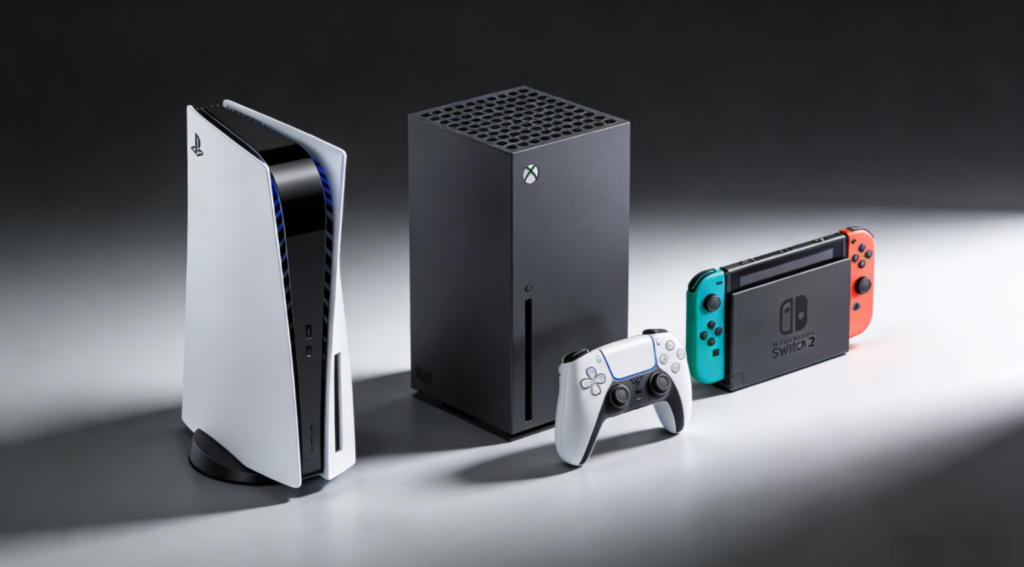
The global next-gen game console market is fiercely competitive in 2026, with Nintendo leading the charge—securing over 50% of the UK market share thanks to the explosive success of Switch 2 and its blockbuster exclusive Pokémon: Pokopia. Sony’s PS5 series retains a strong grip on core gamers, while Microsoft’s Xbox ecosystem thrives on the unmatched value of its Game Pass subscription service. This trio dominates the market, each carving out a unique niche: PS5 Pro caters to graphics enthusiasts chasing cinematic 3A experiences, Xbox Series X appeals to budget-conscious and multi-platform players, and Switch 2 reigns supreme in social and portable gaming.
2026 has put an end to the “one-size-fits-all” console myth. More players are facing regrets—like buying a Switch 2 only to find it can’t run GTA 6, or investing in a PS5 Pro without realizing its lack of family-friendly multiplayer games. The key to satisfaction lies in matching hardware capabilities to your gaming habits: whether you’re a solo player chasing 4K/60fps perfection, a parent seeking cross-generational fun, or a budget gamer wanting maximum value. Below, we break down the technical innovations, core strengths, and ideal use cases for each flagship console to help you make an informed choice.
I. Core Technology: Defining the Next-Gen Experience 🎯
Each console’s technical foundation shapes its gaming identity, with distinct priorities in performance, portability, and ecosystem integration:
1. Performance & Graphics: From Cinematic Realism to Portable Play 🖼️
- PS5 Pro: Sony’s 2026 upgraded flagship teams up with AMD for “Project Amethyst,” replacing the previous PSSR upscaling with full-featured AMD FSR 4. This delivers near-native 4K visuals at 60fps (or 1440p at 120fps) for demanding titles like Marvel’s Wolverine and the highly anticipated GTA 6. Its enhanced GPU handles complex real-time ray tracing with improved global illumination, while the ultra-high-speed 2TB SSD eliminates load times even for massive open worlds.
- Xbox Series X: Microsoft’s workhorse balances accessibility and power. It supports DirectX 12 Ultimate for ray tracing and variable rate shading, delivering consistent 4K/30fps or 1440p/60fps performance across most 3A titles. The console’s DirectStorage technology ensures fast asset streaming, while its backward compatibility (covering four generations of Xbox games) offers unparalleled library depth.
- Nintendo Switch 2: Nintendo prioritizes balance over raw power, with a 2-3x performance boost over the original Switch. Its custom NVIDIA Tegra chip handles 1080p/60fps in docked mode and 720p/60fps in portable mode for first-party titles like The Legend of Zelda: Echoes of Wisdom, though third-party 3A games may run at lower settings or be unavailable. The 7.9-inch OLED display with improved color accuracy elevates portable play, while the low-power architecture extends battery life to 6-8 hours for most games.
2. Ecosystem & Exclusive Content: The Games That Define Each Platform 🎮
- PS5 Pro: Sony’s greatest asset is its curated lineup of exclusive IPs. 2026 highlights include God of War: Ragnarök Unleashed (a Pro-enhanced sequel with 8K upscaling), The Last of Us Part III, and timed exclusivity for GTA 6’s premium content. PS Plus offers a rotating library of AAA games, though it can’t match Xbox Game Pass’s breadth.
- Xbox Series X: Microsoft’s Game Pass (XGP) subscription service is a game-changer—costing roughly the price of a single AAA game per month for access to over 400 titles, including day-one exclusives like The Elder Scrolls VI and Forza Motorsport 9. The ecosystem’s cross-platform play and progression (between console, PC, and mobile) appeal to multi-device users, while backward compatibility ensures access to classics like Halo: Reach and Fallout 4.
- Nintendo Switch 2: Nintendo’s first-party magic remains unmatched, with 2026 hits like Pokémon: Pokopia (driving a 154% month-over-month sales surge), Super Mario Bros. Wonder 2, and Animal Crossing: New Horizons – Expansion Pass. Its exclusive focus on family-friendly, social, and creative games—many designed for local multiplayer or portable play—creates an ecosystem no other console can replicate.
3. Hardware Design & Innovation: Form Follows Function 📱
- PS5 Pro: Retains the iconic dual-sense design but features a sleeker, more compact chassis. The DualSense 2 controller boasts haptic feedback 2.0 (with improved texture simulation) and adaptive triggers with customizable tension. It supports 4K HDR output via HDMI 2.1 and includes a built-in 4K Blu-ray drive for physical media enthusiasts.
- Xbox Series X: Maintains its minimalist “fridge” design, prioritizing quiet operation and efficient cooling. The Xbox Wireless Controller offers refined ergonomics and seamless syncing with Windows PCs and mobile devices. It’s available with or without a 4K Blu-ray drive (Series X vs. Series S), catering to both digital and physical gamers.
- Nintendo Switch 2: The hybrid design remains its defining feature—easily switching between docked (TV) and handheld modes. It upgrades to 256GB of internal storage (expandable via microSD) and adds GameChat, supporting up to 12-player voice chat for online multiplayer. The Joy-Con controllers retain motion sensing and HD rumble, with improved durability over the original Switch.
II. Flagship Console Breakdown: Strengths, Weaknesses, and Value 🏆
1. Sony PlayStation 5 Pro (Best for Core Gamers) ⭐
- Specs: Custom AMD Zen 4 CPU, RDNA 3 GPU with FSR 4 support, 2TB SSD, 16GB GDDR6X RAM, HDMI 2.1, 4K Blu-ray drive, 450W power supply, weight 4.5kg.
- Key Features: 4K/60fps (120fps at 1440p) performance, enhanced ray tracing, DualSense 2 haptics, PS Plus Premium (cloud streaming, exclusive demos), backward compatibility with PS4/PS5 library.
- Price: $599.99 (2TB model).
- Pros: Industry-leading graphics for 3A titles, unrivaled exclusive IPs, premium build quality, physical media support.
- Cons: Premium pricing, limited family-friendly multiplayer games, no native portability.
- Best For: Solo players, 3A game enthusiasts, graphics purists, and fans of Sony’s exclusive franchises (God of War, The Last of Us, Marvel games).
2. Microsoft Xbox Series X (Best for Value & Multi-Platform Gamers) 💰
- Specs: Custom AMD Zen 2 CPU, RDNA 2 GPU, 1TB SSD, 16GB GDDR6 RAM, HDMI 2.1, 4K Blu-ray drive, 300W power supply, weight 4.4kg.
- Key Features: Xbox Game Pass Ultimate (400+ games, day-one exclusives), cross-platform play/progression, backward compatibility (Xbox One/360/Original), Quick Resume (switch between multiple games instantly).
- Price: $499.99 (1TB model); $299.99 (Series S, 512GB digital-only).
- Pros: Unbeatable value via Game Pass, seamless PC integration, extensive backward compatibility, quiet operation.
- Cons: Fewer exclusive titles than PS5 Pro, less powerful GPU for raw graphics performance.
- Best For: Budget gamers, multi-platform users, subscription service lovers, and fans of Microsoft’s first-party IPs (Halo, Forza, Elder Scrolls).
3. Nintendo Switch 2 (Best for Social & Portable Gaming) 🎉
- Specs: Custom NVIDIA Tegra X2 CPU, 256GB SSD, 8GB LPDDR5 RAM, 7.9-inch OLED display (1920×1200), HDMI 2.0 (docked 1080p), weight 0.7kg (handheld)/1.1kg (with dock).
- Key Features: Hybrid docked/handheld mode, GameChat (12-player voice chat), local multiplayer (up to 8 players), backward compatibility with original Switch games, 6-8 hour battery life.
- Price: $349.99 (256GB model).
- Pros: Unmatched portability, family-friendly multiplayer games, strong first-party exclusives, affordable price point.
- Cons: Can’t run most third-party 3A titles (e.g., GTA 6), lower graphical fidelity compared to PS5 Pro/Xbox Series X.
- Best For: Families, social gamers, portable play enthusiasts, and fans of Nintendo’s iconic IPs (Mario, Zelda, Pokémon).
III. Recommendations by Gaming Style 🎭
1. Solo 3A Enthusiasts & Graphics Purists 🎬
- Top Pick: PS5 Pro
- Why: Its FSR 4 upscaling, enhanced ray tracing, and exclusive access to cinematic masterpieces like The Last of Us Part III and GTA 6 deliver the most immersive solo gaming experience. The DualSense 2’s haptic feedback adds a tactile layer that elevates story-driven games beyond what Xbox or Switch 2 can offer.
2. Family & Social Gamers 👨👩👧👦
- Top Pick: Nintendo Switch 2
- Why: Games like Mario Kart 9, Pokémon: Pokopia, and Animal Crossing: New Horizons are designed to bring people together—whether via local multiplayer or online GameChat. Its hybrid design lets you switch from family TV sessions to on-the-go play with friends, making it the ultimate social gaming device.
3. Budget-Conscious & Multi-Platform Players 💰
- Top Pick: Xbox Series X + Game Pass Ultimate
- Why: For the price of a single AAA game per month, Game Pass grants access to hundreds of titles, including day-one exclusives and cross-platform hits. The Series X’s backward compatibility and PC integration ensure you get maximum value from your gaming library, even if you switch between devices.
4. Portable Gamers & Commuters 🚇
- Top Pick: Nintendo Switch 2
- Why: Its lightweight design, 6-8 hour battery life, and 7.9-inch OLED display make it perfect for gaming on trains, planes, or coffee breaks. Unlike the stationary PS5 Pro and Xbox Series X, it lets you take your favorite games anywhere—without sacrificing quality for first-party titles.
5. Retro Gaming Fans 🕹️
- Top Pick: Xbox Series X
- Why: Its backward compatibility covers four generations of Xbox games, from original Xbox classics like Fable to Xbox One hits like Red Dead Redemption 2. Combined with Game Pass’s rotating library of retro and modern titles, it offers the most comprehensive retro gaming experience.
6. Physical Media Collectors 📀
- Top Pick: PS5 Pro
- Why: It retains a 4K Blu-ray drive, allowing you to play physical copies of new and old games. Unlike the digital-only Xbox Series S or Switch 2 (which lacks a disc drive), it caters to collectors who value physical media and resaleability.
IV. How to Choose the Right Next-Gen Console 🛒
1. Prioritize Your Gaming Priorities
- Game Library: Ask yourself: What games do I need to play? If it’s GTA 6 or God of War, PS5 Pro is the answer. If it’s Pokémon or Zelda, Switch 2 is non-negotiable. If you want variety without buying individual games, Xbox Game Pass is unbeatable.
- Playstyle: Do you game solo or with others? Solo players thrive with PS5 Pro’s exclusives. Social gamers need Switch 2’s multiplayer focus. Multi-platform players benefit from Xbox’s cross-device ecosystem.
- Usage Scenario: Will you game primarily on a TV (PS5 Pro/Xbox Series X) or on the go (Switch 2)? The Switch 2’s hybrid design is the only option if you need both.
2. Evaluate Performance vs. Value
- Raw Power: If 4K/60fps graphics are non-negotiable, PS5 Pro is the clear winner. Xbox Series X offers solid performance at a lower price, while Switch 2 prioritizes portability over power.
- Subscription Costs: Factor in long-term expenses: PS Plus Premium ($17.99/month) vs. Xbox Game Pass Ultimate ($14.99/month) vs. Nintendo Switch Online ($3.99/month). Game Pass delivers the best value for casual to moderate gamers.
- Storage Needs: PS5 Pro (2TB) and Xbox Series X (1TB) offer more internal storage than Switch 2 (256GB), but all support expandable storage via SSD or microSD.
3. Consider Ecosystem Compatibility
- Existing Devices: If you own a Windows PC, Xbox Series X syncs seamlessly for cross-platform play. If you have a collection of original Switch games, Switch 2’s backward compatibility lets you reuse them.
- Controller Preference: The DualSense 2’s haptics are a highlight for PS5 Pro, while Xbox’s controller is more ergonomic for long sessions. Switch 2’s Joy-Cons are ideal for motion-controlled games but less comfortable for extended play.
4. Avoid Common Pitfalls
- Buying for Specs Alone: A powerful console is useless if it doesn’t have the games you want. Don’t choose PS5 Pro just for its GPU if you mainly play family games.
- Ignoring Portability Needs: If you travel frequently, a stationary console like Xbox Series X will sit unused. Switch 2’s hybrid design ensures you can game anywhere.
- Overlooking Subscriptions: Game Pass’s value can’t be overstated—don’t dismiss Xbox just because it has fewer exclusives; the subscription library more than makes up for it.
- Underestimating Social Play: If you game with friends or family, Switch 2’s local multiplayer and GameChat are far more user-friendly than PS5 Pro’s or Xbox’s online-only focus.
Conclusion
2026’s next-gen console wars boil down to three distinct philosophies: Sony’s PS5 Pro delivers cinematic perfection for solo 3A enthusiasts, Microsoft’s Xbox Series X offers unbeatable value and flexibility for multi-platform gamers, and Nintendo’s Switch 2 dominates social and portable play. There is no “best” console—only the best console for your gaming habits.
The key to satisfaction is aligning your choice with your priorities: if graphics and exclusives matter most, PS5 Pro is your answer; if value and variety are key, Xbox Series X + Game Pass is unbeatable; if portability and family fun are non-negotiable, Switch 2 reigns supreme. As the market evolves—with Microsoft’s Project Helix on the horizon for 2027—these three flagships will continue to define the next-gen experience, each catering to a unique slice of the gaming community.
By focusing on your game library, playstyle, and usage scenario, you’ll avoid buyer’s remorse and find a console that delivers years of enjoyment. Whether you’re chasing 4K/60fps perfection, bonding with family over Mario Kart, or exploring hundreds of games on a budget, 2026’s next-gen consoles offer something for every type of gamer—proving that the best console is the one that fits your lifestyle.
About the Author