Buying Children’s Furniture: Safety and Fun Are Both Essential
Table 1: Article Outline
| Heading Level | Heading Title |
|---|---|
| H1 | Buying Children’s Furniture: Safety and Fun Are Both Essential |
| H2 | Introduction: Why Kids’ Furniture Needs Special Attention |
| H2 | 1. Safety First: Non-Negotiable Features |
| H3 | Certifications to Look For (ASTM, CPSC, GREENGUARD) |
| H3 | Rounded Edges, Stable Bases, and Non-Toxic Materials |
| H2 | 2. Age-Appropriate Designs |
| H3 | Toddler Beds vs. Twin Beds: What’s Right for Your Child? |
| H3 | Adjustable Desks and Chairs for Growing Kids |
| H2 | 3. Materials Matter: What’s Safe and Durable? |
| H3 | Solid Wood vs. Engineered Wood |
| H3 | Non-Toxic Paints and Finishes |
| H3 | Hypoallergenic Fabrics for Upholstery |
| H2 | 4. Functional and Fun: Balancing Practicality with Playfulness |
| H3 | Bunk Beds with Slides: Yay or Nay? |
| H3 | Storage Solutions That Encourage Organization |
| H2 | 5. The Best Furniture for Small Spaces |
| H3 | Loft Beds with Study Areas Underneath |
| H3 | Foldable and Multi-Functional Pieces |
| H2 | 6. Avoiding Common Hazards |
| H3 | Tipping Risks: How to Secure Dressers and Bookshelves |
| H3 | Choking Hazards in Decor and Hardware |
| H2 | 7. Budgeting Wisely: Where to Splurge and Save |
| H3 | Investing in a Quality Mattress |
| H3 | Affordable but Safe Alternatives |
| H2 | 8. Top Brands That Prioritize Safety and Style |
| H3 | Eco-Friendly and Non-Toxic Brands |
| H3 | Budget-Friendly Retailers with Reliable Options |
| H2 | 9. DIY and Upcycling: Making Old Furniture Kid-Friendly |
| H3 | Repainting with Low-VOC Paints |
| H3 | Adding Safety Features to Existing Furniture |
| H2 | 10. The Role of Ergonomics in Children’s Furniture |
| H3 | Proper Desk Height for Homework |
| H3 | Supportive Chairs for Good Posture |
| H2 | 11. The Future of Kids’ Furniture: Smart and Sustainable Trends |
| H3 | Modular Furniture That Grows with Your Child |
| H3 | Eco-Conscious Materials Gaining Popularity |
| H2 | Conclusion: Creating a Safe and Inspiring Space for Your Child |
| H2 | FAQs About Children’s Furniture |
Table 2: The Article
Buying Children’s Furniture: Safety and Fun Are Both Essential
Introduction: Why Kids’ Furniture Needs Special Attention
Kids’ furniture isn’t just miniature versions of adult furniture—it’s a unique category where safety, durability, and imagination must coexist. From toddler beds that prevent midnight tumbles to study desks that adapt as your child grows, choosing the right pieces ensures a secure and stimulating environment. Here’s how to navigate the market wisely.
1. Safety First: Non-Negotiable Features
Certifications to Look For (ASTM, CPSC, GREENGUARD)
- ASTM International: Ensures cribs, high chairs, and bunk beds meet safety standards.
- GREENGUARD Gold: Guarantees low chemical emissions (critical for nurseries).
Rounded Edges, Stable Bases, and Non-Toxic Materials
- Rounded corners prevent injuries from sharp edges.
- Anti-tip kits anchor dressers to walls (IKEA’s “Secure It!” campaign is a must-follow).
2. Age-Appropriate Designs
Toddler Beds vs. Twin Beds: What’s Right for Your Child?
| Feature | Toddler Bed | Twin Bed |
|---|---|---|
| Height | Low to the ground (easy in/out) | Standard height |
| Safety Rails | Often included | Optional add-ons |
| Lifespan | 2–4 years | 5+ years |
Adjustable Desks and Chairs for Growing Kids
- Height-adjustable desks (like FlexiSpot’s Kids’ Line) adapt from kindergarten to teen years.
- Ergonomic chairs with footrests support proper posture.
3. Materials Matter: What’s Safe and Durable?
Solid Wood vs. Engineered Wood
- Solid wood (birch, maple): Long-lasting, splinter-resistant.
- Plywood/ MDF: Affordable but check for formaldehyde-free labels.
Non-Toxic Paints and Finishes
- Water-based paints (zero VOCs) are safest for cribs and toy chests.
- Avoid: Glossy finishes with high chemical content.
Hypoallergenic Fabrics for Upholstery
- Organic cotton or OEKO-TEX-certified fabrics for mattresses and cushions.
4. Functional and Fun: Balancing Practicality with Playfulness
Bunk Beds with Slides: Yay or Nay?
- Pros: Kids love them; great for sleepovers.
- Cons: Ensure guardrails and a secure ladder. Best for ages 6+.
Storage Solutions That Encourage Organization
- Under-bed drawers for stuffed animals.
- Color-coded bins to teach tidiness.
5. The Best Furniture for Small Spaces
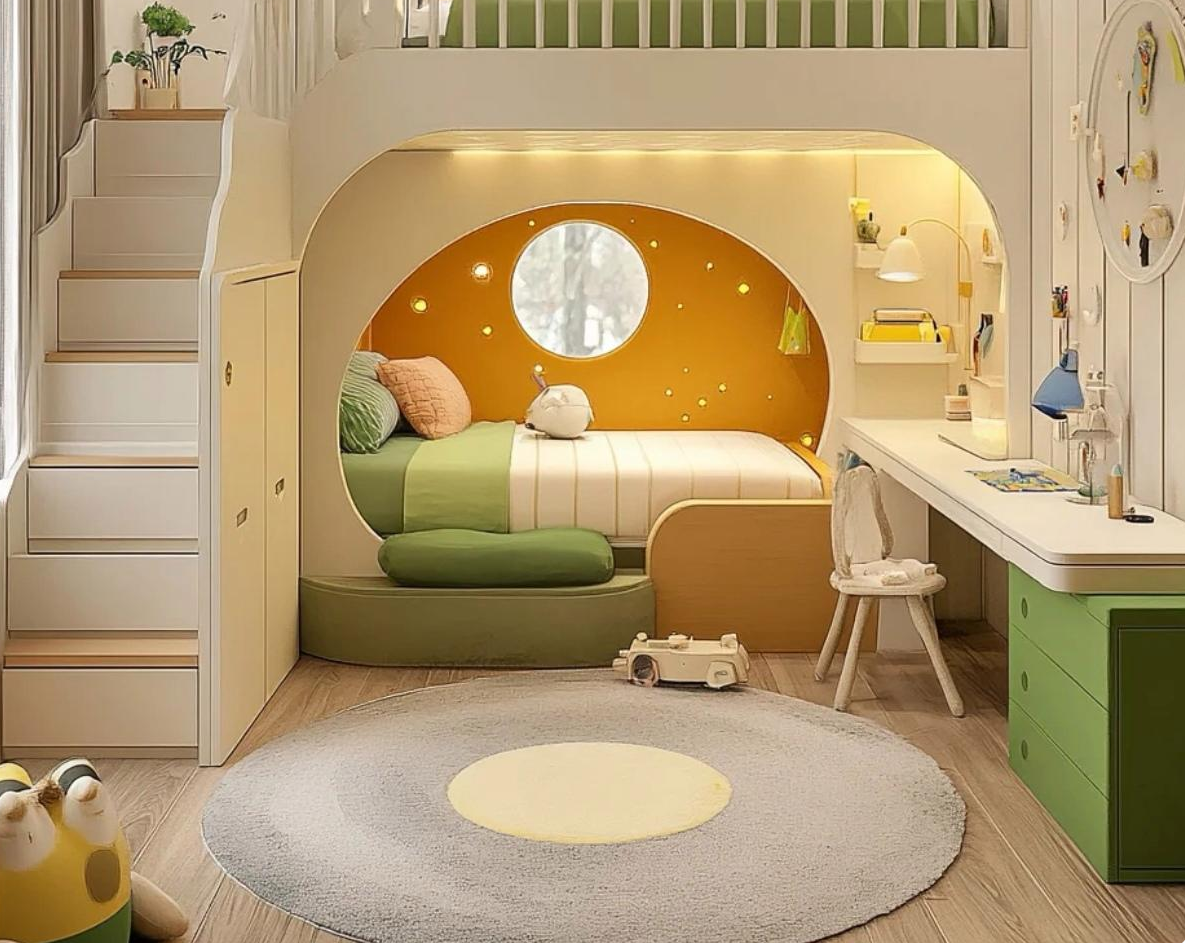
Loft Beds with Study Areas Underneath
- Maximizes floor space in shared rooms.
- Look for: Built-in desks or shelving (e.g., Delta Children’s Loft Bed).
Foldable and Multi-Functional Pieces
- Wall-mounted desks that fold away after homework.
- Convertible cribs that turn into toddler beds (like Babyletto’s Hudson).
6. Avoiding Common Hazards
Tipping Risks: How to Secure Dressers and Bookshelves
- Anchor furniture to walls with anti-tip straps.
- Place heavier items on lower shelves.
Choking Hazards in Decor and Hardware
- Avoid: Small knobs or detachable decor on cribs.
- Opt for: Screw-on accessories instead of glued-on ones.
7. Budgeting Wisely: Where to Splurge and Save
Investing in a Quality Mattress
- Organic latex or coil-spring mattresses support growing spines.
- Skip cheap foam mattresses (they sag quickly).
Affordable but Safe Alternatives
- IKEA’s SNIGLAR crib: $100, meets all safety standards.
- Target’s Project 62 line: Stylish, budget-friendly dressers.
8. Top Brands That Prioritize Safety and Style
Eco-Friendly and Non-Toxic Brands
- Avocado Kids: Organic mattresses and cribs.
- Oeuf: Modern, sustainable designs.
Budget-Friendly Retailers with Reliable Options
- Wayfair’s “Kids’ Essentials” collection.
- Amazon’s Rivet mid-century kids’ line.
9. DIY and Upcycling: Making Old Furniture Kid-Friendly
Repainting with Low-VOC Paints
- Chalk paint is durable and easy to touch up.
Adding Safety Features to Existing Furniture
- Attach corner guards to sharp tables.
- Replace toxic varnishes with beeswax polish.
10. The Role of Ergonomics in Children’s Furniture
Proper Desk Height for Homework
- **Elbows at 90°** when typing/writing.
- Feet flat on the floor (use a footrest if needed).
11. The Future of Kids’ Furniture: Smart and Sustainable Trends
Modular Furniture That Grows with Your Child
- Cribs converting to full-size beds (e.g., Stokke’s Sleepi).
Eco-Conscious Materials Gaining Popularity
- Bamboo cribs and recycled plastic play tables.
Conclusion: Creating a Safe and Inspiring Space for Your Child
Prioritize safety certifications, adaptable designs, and non-toxic materials—then let creativity shine with playful colors and smart storage. The right furniture nurtures both security and imagination.
FAQs About Children’s Furniture
1. What’s the safest crib material?
Solid hardwood (birch, maple) with non-toxic finishes.
2. Are bunk beds safe for 5-year-olds?
Only if the top bunk has full guardrails and the child can climb safely.
3. How often should I replace a kid’s mattress?
Every 5–8 years, or if sagging occurs.
4. Can I use regular paint for kids’ furniture?
No—always choose zero-VOC, child-safe paints.
5. What’s the best way to childproof drawers?
Install magnetic safety latches or soft-close hinges.
About the Author