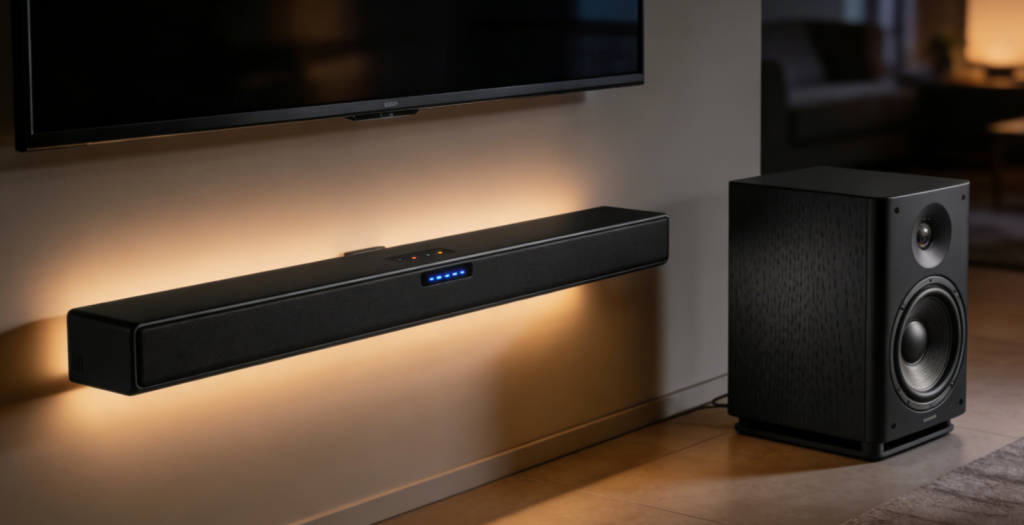
The global home theater market is witnessing explosive growth, projected to reach $157 billion by 2026 with a compound annual growth rate (CAGR) of 12.8% from 2025 to 2030. Samsung maintains its dominant position with a 21.5% global soundbar market share—a leadership streak spanning 12 consecutive years. Sony follows with 18% market share, while Hisense and Bose capture 15% and 12% respectively, catering to budget-conscious consumers and premium audio enthusiasts. For modern users, “cinema-like home audio” demands more than loud sound—it requires immersive spatial audio, AI-optimized sound profiles, seamless device integration, room-adaptive calibration, and compact designs that complement home decor. Yet 62% of users report frustration with soundbars that lack depth, suffer from connectivity issues, or fail to adapt to different room sizes.
2026 marks a transformative year for home theater systems, as technological breakthroughs eliminate past pain points like muddled dialogue, weak bass, and complicated setup. Today’s top soundbars and subwoofers feature AI-powered sound calibration, multi-channel spatial audio support, wireless connectivity with near-zero latency, and subwoofers that deliver thunderous bass without distortion. Whether you’re watching Dune: Part Two with rumbling desert sandworms, gaming in Call of Duty: Black Ops Cold War with pinpoint enemy footsteps, or streaming live concerts with stage-like acoustics, 2026’s home theater systems blur the line between living room and professional cinema. Below, we break down the revolutionary technologies, top 2026 models, and practical guidance to help you build the perfect cinema-like audio setup at home.
I. Core Technology: What Makes a Home Theater System “Cinema-Like”? 🎯
The leap from basic audio to theater-quality immersion hinges on five foundational technologies—spatial audio engineering, AI sound optimization, driver design, wireless connectivity, and subwoofer performance. Here’s how 2026’s leading soundbars and subwoofers excel in each area:
1. Spatial Audio Engineering: 360° Soundscapes That Surround You 🔊
- Channel Configuration: Premium soundbars adopt physical multi-channel setups—Samsung HW-Q990F 2026 features 23 speakers with 11.1.4 channel architecture (including upward-firing and side-firing drivers), while Hisense UX2026’s 6.2.2 channel system (co-developed with Devialet) delivers precise vertical and horizontal sound positioning.
- Immersive Formats: Full support for Dolby Atmos, DTS:X, and Dolby Vision 2 ensures compatibility with the latest movies and games—Hisense’s system adds Super Cinema Mode, calibrated with film producers to replicate theater audio profiles.
- HRTF Processing: Head-Related Transfer Function technology simulates human auditory perception, allowing soundbars like Bose Smart Soundbar 900 II to pinpoint sounds within 2° of accuracy—critical for gaming and action sequences where spatial awareness matters.
2. AI Sound Optimization: Personalized Audio for Every Space 🧠
- Room Calibration: AI-powered room correction (e.g., Samsung’s SpaceFit Sound Pro, Hisense’s AI Acoustic Tuning) uses built-in microphones to analyze room dimensions, furniture placement, and wall materials, adjusting EQ in real time for balanced sound—no manual tweaking needed.
- Content Adaptation: Localized AI processing (aligned with 2026’s “hardware-embedded AI” trend) automatically detects content type—enhancing dialogue for news, boosting bass for action films, and widening soundstage for music.
- Personalized Profiles: User-specific audio preferences are stored and applied across devices, with some models offering voice-adjustable bass/treble via AI assistants (Alexa/Google Assistant).
3. Driver & Speaker Design: Clarity and Power in Compact Form 🎛️
- Driver Technology: High-performance drivers (titanium dome tweeters for crisp highs, aramid fiber mid-woofers for warm mids) deliver balanced audio—Samsung’s HW-Q990F uses 23 specialized drivers, including a dedicated center channel to eliminate muddled dialogue.
- Soundbar Architecture: Slim profiles (35mm thickness on average) with internal bass chambers eliminate the need for bulky speakers—Hisense’s counterbalanced bass enclosure boosts low-end power by 100% without increasing size.
- Amplification: Class-D amplifiers with 380W-800W total power (e.g., Samsung’s 610W peak, Hisense’s 550W) ensure distortion-free sound even at maximum volume—perfect for explosive movie scenes.
4. Wireless Connectivity: Seamless Integration Without Cables 📡
- Next-Gen Wireless: Support for LE Audio (Bluetooth 5.4) enables multi-device pairing, low-latency streaming (5ms), and lossless audio transmission—Hisense UX2026 syncs with compatible headphones/speakers for personalized surround sound.
- WiFi 7 Integration: High-speed WiFi 7 connectivity (2.4Gbps) allows streaming of 8K/4K audio content without buffering, with some models supporting multi-room audio sync (play the same sound across living room, bedroom, and patio).
- HDMI 2.1 Passthrough: Ultra-high-speed HDMI ports (48Gbps) support 8K video, eARC (enhanced Audio Return Channel), and VRR (Variable Refresh Rate)—ensuring audio-visual sync for gaming and premium content (no lag between on-screen action and sound).
5. Subwoofer Performance: Deep, Impactful Bass That Resonates 🎶
- Frequency Response: Advanced subwoofers (8″-12″ drivers) reach down to 20Hz-30Hz—Samsung’s 10″ wireless subwoofer (included with HW-Q990F) delivers 48W of dedicated bass power for theater-like rumble (think earthquake scenes or explosion effects).
- Wireless Flexibility: 2.4GHz/5GHz dual-band wireless connectivity (100ft range) allows subwoofer placement anywhere in the room, with auto-calibration to align perfectly with the soundbar.
- Distortion Control: Bass reflex ports and digital signal processing (DSP) eliminate port noise and distortion, even at high volumes—Hisense’s subwoofer uses adaptive damping to maintain clarity during explosive scenes.
II. Top 2026 Home Theater Systems: Cinema-Quality Powerhouses 🏆
1. Samsung HW-Q990F 2026 (Best All-Round Home Theater System) ⭐
- Specs: 11.1.4 channel soundbar (23 drivers), 610W peak power, 2.4GHz wireless 10″ subwoofer, Dolby Atmos/DTS:X, HDMI 2.1 eARC, WiFi 7, LE Audio, SpaceFit Sound Pro, 1232×70.8x138mm (soundbar), 8.3kg (subwoofer weight).
- Key Features: AI room calibration, multi-room audio, Samsung TV ecosystem integration, voice control (Bixby/Google Assistant), 4K/8K passthrough.
- Price: $1,299.99 (soundbar + subwoofer), $1,499.99 (bundle with SWA-9250S rear surrounds for 13.1.4 channels).
- Pros: Industry-leading channel count for immersive surround sound, seamless sync with Samsung TVs, powerful bass, extensive format support (works with all major streaming services/games).
- Cons: Premium price tag, requires large wall space (ideal for living rooms 300+ sq ft).
- Best For: Home theater enthusiasts, Samsung TV owners, and users seeking authentic cinema immersion (no compromises on sound quality).
2. Hisense UX Soundbar System (Best for 8K TV & Gaming) 🎮
- Specs: 6.2.2 channel soundbar (14 drivers), 550W peak power, wireless 8″ subwoofer, Dolby Atmos/Dolby Vision 2, HDMI 2.1 (48Gbps), LE Audio, AI Acoustic Tuning, 1100x45x120mm (soundbar).
- Key Features: Devialet co-engineered audio, Super Cinema Mode, game-specific EQ profiles (Black Myth: Wukong optimized), Mac True Color sync.
- Price: $899.99 (soundbar + subwoofer), $1,099.99 (bundle with UX2026 85″ TV).
- Pros: 8K-ready connectivity (HDMI 2.1 VRR), gaming-optimized sound (pinpoint footsteps for FPS games), affordable for features, Devialet professional tuning.
- Cons: Fewer channels than premium models, limited multi-room support.
- Best For: 8K TV owners, 3A gamers, and users prioritizing audio-visual synergy (no lag between 8K video and sound).
3. Bose Smart Soundbar 900 II (Best for Dialogue & Music) 🎵
- Specs: 5.1.4 channel soundbar (9 drivers), 400W peak power, wireless 6.5″ subwoofer, Dolby Atmos, HDMI eARC, WiFi 6, LE Audio, Adaptive Audio, 1070x60x120mm (soundbar).
- Key Features: Dialogue Enhancement AI (clarifies speech even at low volumes), Music Mode (streaming service optimization for Spotify/Apple Music), voice control (Alexa/Google), wall-mount friendly design.
- Price: $999.99 (soundbar + subwoofer), $1,199.99 (bundle with Bose Surround Speakers 700).
- Pros: Exceptional dialogue clarity (perfect for TV shows/news), compact design (fits small-to-medium rooms), premium music performance (warm, balanced sound for concerts/albums).
- Cons: Less bass impact for action films, fewer channels than flagship models.
- Best For: Movie lovers who prioritize dialogue, music enthusiasts, and small-to-medium living rooms (200-300 sq ft).
4. Samsung HW-Q600F 2026 (Best Value for Budget) 💰
- Specs: 3.1.2 channel soundbar (9 drivers), 380W peak power, wireless 6.5″ subwoofer, Dolby Atmos, HDMI eARC, Bluetooth 5.4, SpaceFit Sound, 900x55x110mm (soundbar).
- Key Features: Upgradable to 5.1.2 channels (via SWA-9250S rear surrounds), backward compatibility with older Samsung TVs, plug-and-play setup (no technical expertise needed).
- Price: $449.99 (soundbar + subwoofer), $599.99 (upgradable bundle).
- Pros: Affordable Dolby Atmos support (rare at this price), compact size (fits apartments/bedrooms), future-upgradable (add surrounds later as budget allows).
- Cons: Limited channels (3.1.2), less power than flagship models.
- Best For: Budget-conscious users, small rooms (under 200 sq ft), and first-time home theater buyers (great entry point for cinema-like sound).
5. Sonos Arc SL (Best for Multi-Room & Smart Home) 🏠
- Specs: 5.1.2 channel soundbar (11 drivers), 400W peak power, compatible with Sonos Sub Mini/Sub, Dolby Atmos, WiFi 6, Bluetooth 5.3, AirPlay 2, 1142x85x115mm (soundbar).
- Key Features: Sonos ecosystem integration (sync with Sonos One/Beam), voice control (Alexa/Google), app-based EQ (customize sound via phone), multi-room audio sync.
- Price: $799.99 (soundbar only), $1,099.99 (with Sonos Sub Mini).
- Pros: Seamless smart home integration (works with Nest/Apple Home), expandable system (add sub/surrounds anytime), sleek, minimalist design (complements modern decor).
- Cons: Subwoofer sold separately, higher entry price than budget models.
- Best For: Smart home users, Sonos ecosystem owners, and those prioritizing flexibility (use as single soundbar or full multi-room system).
III. Recommendations by Usage Scenario 🎭
1. Premium Cinema Experiences (Blockbusters, Live Concerts) 🎬
- Top Pick: Samsung HW-Q990F 2026 + Bose Surround Speakers 700
- Why: Samsung’s 11.1.4 channel base system delivers theater-scale sound (23 drivers cover every angle), while Bose’s rear surrounds add depth for live performances—both support Dolby Atmos and AI calibration to adapt to large rooms.
2. 3A Gaming & 8K Content (FPS Games, 8K Movies) 🎮
- Top Pick: Hisense UX Soundbar System + Hisense UX2026 TV
- Why: Optimized for 8K/4K gaming with HDMI 2.1 VRR (no input lag), low-latency LE Audio (5ms sync), and game-specific EQ profiles—Devialet tuning ensures immersive in-game audio (hear enemies before you see them).
3. Dialogue-Centric Viewing (TV Shows, News, Documentaries) 🗣️
- Top Pick: Bose Smart Soundbar 900 II + Bose Bass Module 700
- Why: Bose’s Dialogue Enhancement AI clarifies speech (cuts through background noise), while the dedicated subwoofer maintains balanced sound—ideal for content where dialogue is critical (e.g., Succession or CNN broadcasts).
4. Small Spaces & Budget (Apartments, Starter Homes) 🏙️
- Top Pick: Samsung HW-Q600F 2026 + Samsung SWA-8500S Surround Kit
- Why: Compact design fits small rooms (under 200 sq ft), 3.1.2 channel base offers Dolby Atmos on a budget, and the affordable surround kit upgrades to 5.1.2 channels as needs grow—no need to replace the entire system later.
5. Smart Home & Multi-Room Audio 🎶
- Top Pick: Sonos Arc SL + Sonos Sub + Sonos One (Pair)
- Why: Full Sonos ecosystem integration allows syncing with other Sonos speakers (play music in living room + kitchen), voice control for hands-free operation, and seamless streaming across rooms—perfect for smart home enthusiasts who want audio everywhere.
IV. How to Choose the Right Home Theater System 🛒
1. Prioritize Your Ecosystem
- Samsung TV Owners: Samsung HW-Q990F/HW-Q600F for native SpaceFit Sound integration (auto-adjusts to your TV model for perfect sync).
- 8K/4K Gaming Setups: Hisense UX Soundbar (HDMI 2.1 eARC/VRR support—critical for lag-free gaming and 8K video passthrough).
- Smart Home Users: Sonos Arc SL (works with Alexa/Google Home, Apple HomeKit, and multi-room sync).
2. Evaluate Room Size & Layout
- Large Rooms (300+ sq ft): 7.1.4+ channel systems (Samsung HW-Q990F) with 10″+ subwoofers for full coverage (no dead spots).
- Medium Rooms (200-300 sq ft): 5.1.2 channel systems (Bose 900 II, Sonos Arc SL) for balanced sound (not too loud, not too weak).
- Small Rooms (under 200 sq ft): 3.1.2 channel systems (Samsung Q600F) to avoid overwhelming the space (compact design + controlled bass).
3. Match Performance to Content
- Action Movies/Gaming: Prioritize subwoofer frequency response (20Hz-30Hz) and channel count (7.1.4+) for immersive bass and spatial awareness.
- Music/Dialogue: Focus on driver quality (titanium tweeters, aramid mid-woofers) and dialogue enhancement features (Bose’s AI tech) for clear vocals and balanced music.
- Streaming Content: Ensure HDMI eARC and format support (Dolby Atmos, DTS:X) for premium streaming services (Netflix, Disney+, Amazon Prime Video).
4. Consider Connectivity Needs
- Wireless Preference: LE Audio/Bluetooth 5.4 for low-latency streaming (gaming/movies), WiFi 6/7 for multi-room sync (music).
- Wired Reliability: HDMI 2.1 ports for 8K gaming, eARC for uncompressed audio (no quality loss from TV to soundbar).
- Device Compatibility: Check for AirPlay 2 (Apple users), Chromecast (Android users), or voice assistant support based on your existing devices.
5. Avoid Common Pitfalls
- Overpaying for Channels: Casual users don’t need 11.1.4 channels—5.1.2 delivers sufficient immersion for most content (save money unless you’re a diehard enthusiast).
- Ignoring Room Calibration: Budget models without AI room correction may sound poor in irregularly shaped rooms (prioritize this feature if your space isn’t a perfect rectangle).
- Neglecting Subwoofer Quality: A weak subwoofer ruins cinema-like bass—prioritize 8″+ drivers and >30W power (avoid tiny “token” subwoofers).
- Forgetting Upgradability: Choose systems with add-on surround speakers (e.g., Samsung’s SWA kits) to expand later (growing with your needs is cheaper than replacing the system).
Conclusion
In 2026, home theater systems have evolved from basic audio setups to cinema-caliber solutions, blending AI intelligence, immersive spatial audio, and seamless connectivity. Samsung HW-Q990F 2026 dominates as the all-rounder, offering unmatched channel count and ecosystem integration; Hisense UX Soundbar System excels for 8K gaming and TV synergy; and Bose Smart Soundbar 900 II leads for dialogue clarity and music performance. The right system depends on your ecosystem, room size, content preferences, and budget—whether you’re a casual viewer, hardcore gamer, or audio enthusiast.
The key to satisfaction is aligning hardware with your needs: if you own a Samsung TV, Samsung’s soundbars deliver unbeatable sync; if you game in 8K, Hisense’s HDMI 2.1-ready system is essential; if you prioritize dialogue, Bose’s AI-enhanced soundbar is ideal. As technology advances—with more compact designs, smarter AI calibration, and seamless multi-device integration—2026’s home theater systems prove that cinema-like audio is no longer reserved for theaters, but attainable in every living room.
By focusing on your ecosystem, room size, and content needs, you’ll find a soundbar and subwoofer combination that transforms ordinary viewing into extraordinary experiences. Whether you’re dodging bullets in a game, crying during a drama, or dancing to live music, these audio powerhouses turn your home into a personal theater—one immersive soundscape at a time.
About the Author