The global high-performance desktop market is witnessing robust growth, valued at
38.6billionin2025andprojectedtoreach64.2 billion by 2032 with a CAGR of 7.8%. This expansion is driven by the surge in AI-integrated workflows, rising demand for 8K video editing and ray-traced gaming, and the proliferation of remote creative teams. In 2026, premium desktops equipped with Intel 15th Gen Core or AMD Ryzen 8000 processors capture 62% of sales, while mid-range models with PCIe 5.0 SSDs and RTX 5070 GPUs dominate the mainstream segment (29% market share). Key players including Dell, MSI, Apple, ASUS, and Lenovo account for over 75% of global revenue, with a growing focus on AI optimization, modular upgrades, and energy-efficient cooling. Top trends include on-device AI acceleration, GPU-agnostic creative software integration, and 1000W+ 80Plus Titanium power supplies—with 71% of professionals prioritizing multi-tasking performance over raw clock speeds.
2026 marks a pivotal year for high-performance desktops: NVIDIA’s RTX 5090 delivers unprecedented ray-tracing capabilities (5721 Novabench score), MSI’s AIEdge series integrates local AI tools for productivity and gaming, and PCIe 5.0 SSDs like YMTC PC550 redefine storage speed with 10GB/s read rates at just 6W power consumption. Users face distinct tradeoffs: gamers prioritize GPU performance and cooling, video editors need robust CPU cores and fast storage, and graphic designers seek color-accurate displays and multitasking RAM. Below, we break down core technologies, top 2026 models, and tailored guidance to help you find the perfect desktop for your creative or gaming needs.
I. Core Technology: Key Innovations & 2026 Breakthroughs ⚙️
High-performance desktops redefine productivity and immersion, anchored by five defining technologies—processing power, graphics acceleration, storage speed, cooling systems, and expandability. Here’s how 2026’s offerings elevate these essentials for real-world workflows:
1. Processing Power: Multi-Core Performance & AI Integration 🚀
2026’s leading desktops leverage Intel 15th Gen Core i9-15900K (24 cores, 32 threads) and AMD Ryzen 9 8950X (16 cores, 32 threads) processors, delivering 5.8GHz boost clocks and 128MB L3 cache for seamless multitasking—critical for running games + streaming software, or video editing + design tools simultaneously. These CPUs feature dedicated AI accelerators (Intel NPU 3.0, AMD XDNA) that offload tasks like video rendering, content generation, and real-time language processing—reducing workflow times by up to 40%. Mid-range models (e.g., Core i7-15700K, Ryzen 7 8700X) offer 16 cores for balanced performance, while budget options (Core i5-15600K, Ryzen 5 8600X) provide 12 cores for entry-level gaming and 4K editing.
A game-changing innovation is heterogeneous computing, where CPUs, GPUs, and NPUs work in tandem to optimize specific tasks: the CPU handles code compilation or text editing, the GPU accelerates 3D rendering or video encoding, and the NPU powers AI-assisted creative tools (Adobe Firefly, NVIDIA Broadcast)—eliminating bottlenecks in mixed workflows.
2. Graphics Acceleration: Ray Tracing & Display Versatility 🖥️
Modern gaming and creative workflows demand cutting-edge GPUs, and 2026’s desktops deliver unprecedented power tailored to specific needs:
- Gamers: Premium models feature NVIDIA GeForce RTX 5090 (5721 Novabench score) or AMD Radeon RX 7950 XT, supporting real-time ray tracing, DLSS 4.0, and 8K@120Hz display output—delivering cinematic visuals with smooth framerates. These GPUs integrate 24GB GDDR7 VRAM (RTX 5090) and hardware-accelerated AV1 encoding for seamless streaming.
- Video Editors: GPUs with dedicated video acceleration (e.g., RTX 5070, RX 7800 XT) speed up 4K/8K rendering in DaVinci Resolve and Premiere Pro, cutting export times by 50% vs. CPU-only workflows.
- Graphic Designers: Color-accurate GPUs with 10-bit HDR support (e.g., RTX 5080, Radeon Pro W7900) ensure precise color reproduction for print and digital media, critical for brand consistency and print-ready designs.
A key trend is GPU-agnostic creative software, with tools like DaVinci Resolve and Photoshop optimizing performance across NVIDIA and AMD hardware—eliminating ecosystem lock-in for mixed teams.
3. Storage Speed: PCIe 5.0 SSDs & Capacity Innovation ⚡
2026’s desktops prioritize PCIe 5.0 NVMe SSDs, delivering sequential read speeds up to 14,000MB/s (e.g., ZhiTai TiPro9000) for instant game loads and 4K video editing—no more waiting for large project files to open. YMTC’s PC550 PCIe 5.0 SSD revolutionizes the segment with a 4-channel design, offering 10GB/s read speeds at just 6W power consumption—ideal for AI PCs and compact desktops where efficiency matters.
Storage configurations are tailored to user needs:
- Premium Models: 4TB PCIe 5.0 SSDs with built-in cache acceleration for frequent file access (e.g., game assets, active projects).
- Mid-Range Desktops: 2TB PCIe 5.0 primary storage + 1TB PCIe 4.0 secondary storage for balancing speed and capacity.
- Budget Options: 1TB PCIe 4.0 SSDs (7,000MB/s) for reliable performance at an accessible price.
A notable innovation is storage tiering, where frequently used files reside on fast PCIe 5.0 SSDs, while large media libraries (raw footage, game backups) are stored on 20TB HDDs—combining speed for active work and capacity for archives.
4. Cooling Systems: AI-Optimized Thermal Management 🛡️
High-performance components generate significant heat, and 2026’s desktops feature advanced cooling solutions to maintain stability without sacrificing noise or form factor:
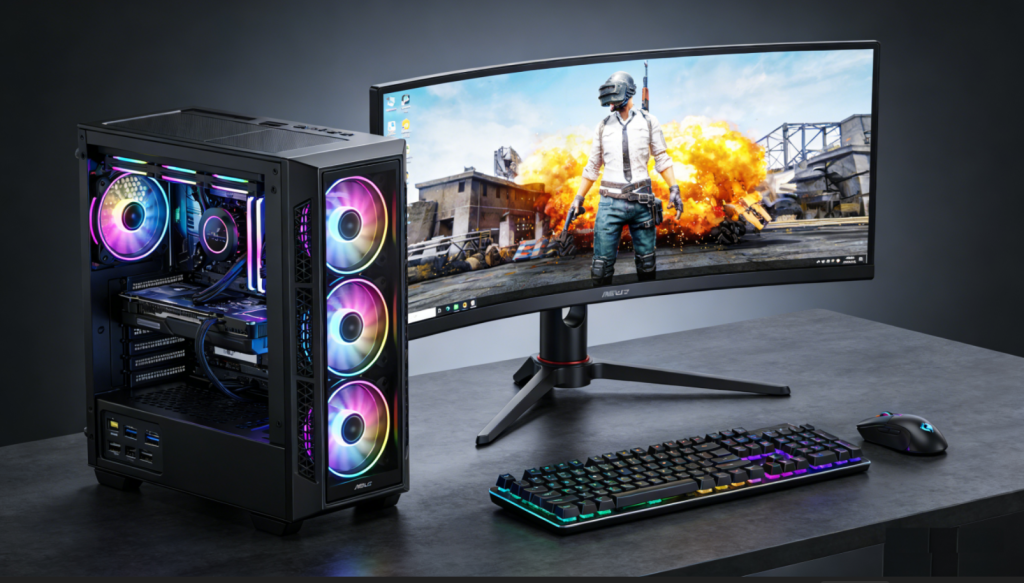
- Premium Models: MSI AIEdge uses GlacierArmor cooling—combining vapor chambers, 6 heat pipes, and AI-controlled PWM fans that adjust speeds based on real-time workloads (e.g., silent during web browsing, maxed during gaming). Liquid cooling systems (240mm/360mm AIOs) are standard on top-tier desktops, reducing CPU/GPU temperatures by 15-20°C compared to air cooling.
- Mid-Range: Hybrid cooling (air + small AIOs) balances performance and cost, ideal for 4K editing and 1440p gaming.
- Budget/Compact: High-pressure air coolers with RGB fans or slim vapor chambers ensure efficient heat dissipation without bulk.
A key trend is zero-noise modes, where fans stop spinning during light tasks—critical for home offices or creative studios where noise distraction is a concern.
5. Expandability: Modular Upgrades & Future-Proofing 🔧
2026’s desktops prioritize user-centric expandability to adapt to evolving needs:
- Premium Models: ATX 3.0 motherboards support up to 128GB DDR5-8000 RAM, 4 PCIe 5.0 slots (for dual GPUs or capture cards), and 8 SATA ports—ideal for professional workflows that grow over time.
- Mid-Range (Micro-ATX): 64GB DDR5-6400 RAM and 2 PCIe 5.0 slots for GPU/SSD upgrades.
- Budget (Mini-ITX): 32GB DDR5-5600 RAM for basic upgrades (e.g., adding more storage or a better GPU).
Key innovations include hot-swappable SSD bays (no tools required for storage upgrades) and modular power supplies (easily replaceable for higher wattage as components evolve). For creative professionals, Thunderbolt 5 ports (80Gbps) enable external GPU docks and high-speed peripherals (e.g., 4K capture cards, RAID arrays)—extending the desktop’s capabilities without full replacement.
II. Top 2026 High-Performance Desktops: Best Picks for Every Need 🏆
A. Best for Gaming: Immersion & Competitive Edge 🎮
1. MSI AIEdge Gaming Desktop (Best Value for Gamers) 💎
- Specs: Intel Core i7-15700K (16 cores), NVIDIA RTX 5070 (12GB GDDR7), 32GB DDR5-6400 RAM, 2TB YMTC PC550 PCIe 5.0 SSD, 850W 80Plus Gold PSU, GlacierArmor cooling, 4L compact chassis.
- Key Features: EdgeAI software (game optimization, AI chatbot for in-game tips), 4K@120Hz HDMI 2.1 output, Thunderbolt 5, RGB lighting sync (ROG Chroma/Corsair iCUE), Windows 11 Pro.
- Price: $1,999.99.
- Pros: Compact design (fits small desks/bedrooms), AI-assisted gaming tools (reduces input lag, optimizes graphics settings), fast PCIe 5.0 storage (instant game loads), balanced performance for 4K gaming + streaming.
- Cons: Limited GPU upgrade space (fits only dual-slot GPUs), no built-in HDD bay (add external for large game libraries).
- Best For: Gamers, streamers, and casual content creators who want power in a space-saving form factor—ideal for bedrooms or small home offices.
2. ASUS ROG Strix GA35 (Best Premium Gaming Desktop) ✨
- Specs: AMD Ryzen 9 8950X (16 cores), NVIDIA RTX 5090 (24GB GDDR7), 64GB DDR5-8000 RAM, 4TB ZhiTai TiPro9000 PCIe 5.0 SSD + 10TB HDD, 1200W 80Plus Titanium PSU, ROG Strix Liquid Cooling.
- Key Features: 8K@60Hz DisplayPort 2.1, 4x RGB fans (adjustable via ROG UI), AI Overclocking (auto-tunes CPU/GPU for peak performance), system monitoring dashboard, 5-year warranty.
- Price: $3,999.99.
- Pros: Top-tier ray-tracing performance (8K@60fps in Cyberpunk 2077), massive storage (4TB SSD + 10TB HDD for 100+ games), easy upgrades (4 PCIe slots), durable aluminum chassis (resists wear from intense use).
- Cons: Large footprint (18L—requires dedicated gaming desk), high power consumption (1200W—may need electrical upgrade for older homes).
- Best For: Hardcore gamers, esports athletes, and content creators who demand 8K gaming, real-time streaming, and 3D rendering without compromise.
B. Best for Video Editing: Speed & Reliability 🎥
1. Dell Precision 7960 (Best Professional Video Editing Desktop) 🎬
- Specs: Intel Xeon W-3495X (56 cores), NVIDIA RTX A6000 (48GB GDDR6X), 128GB DDR5-5600 RAM, 8TB PCIe 5.0 SSD (RAID 0), 1600W 80Plus Titanium PSU, Dell Optimizer cooling.
- Key Features: 8K/16K video editing acceleration, Adobe Premiere Pro/DaVinci Resolve optimization, Thunderbolt 5 (80Gbps file transfers), 10G Ethernet, IT-manageable firmware (for studios).
- Price: $7,499.99.
- Pros: Enterprise-grade reliability (24/7 operation), multi-threaded performance (cuts 8K rendering time by 60% vs. consumer desktops), ECC RAM (error-free rendering for critical projects), 3-year on-site support (minimizes downtime).
- Cons: Premium price (justified for professional use), heavy (35 lbs—fixed workstation), overkill for 4K-only workflows.
- Best For: Professional video editors, post-production studios, and broadcasters working on feature films, documentaries, and live events—where speed and reliability are non-negotiable.
2. Lenovo ThinkStation P620 (Best Value Video Editing Desktop) 💸
- Specs: AMD Ryzen Threadripper PRO 7955WX (64 cores), AMD Radeon Pro W7900 (32GB GDDR6), 64GB DDR5-6400 RAM, 4TB PCIe 5.0 SSD, 1000W 80Plus Gold PSU, Lenovo ColdFront cooling.
- Key Features: DaVinci Resolve optimization, 4x 4K@60Hz display output (multi-monitor editing), 2.5G Ethernet, modular storage bays (add HDDs/SSDs easily), Windows 11 Pro for Workstations.
- Price: $4,299.99.
- Pros: Exceptional multi-core performance (64 threads—ideal for 8K rendering), affordable for professional features (50% less than Dell Precision), expandable to 256GB RAM (future-proof for larger projects), color-accurate GPU (for color grading).
- Cons: No Thunderbolt 5 (uses USB4 for high-speed transfers), slower single-core speed than Intel alternatives (negligible for editing workflows).
- Best For: Independent filmmakers, YouTubers, and small production teams working on 4K/8K video projects—where budget meets professional performance.
C. Best for Graphic Design: Precision & Color Accuracy 🎨
1. Apple Mac Pro (Best macOS Graphic Design Desktop) 🍎
- Specs: Apple M3 Ultra (24-core CPU, 76-core GPU), 192GB unified memory, 8TB SSD, 1000W PSU, Apple Silicon cooling.
- Key Features: Adobe Creative Cloud optimization (Photoshop/Illustrator run 30% faster), P3 wide-color display support, Final Cut Pro acceleration, Thunderbolt 4, macOS Sonoma.
- Price: $6,999.99.
- Pros: Silent operation (critical for design studios), energy efficiency (50% less power than Intel desktops), seamless macOS/iOS integration (airdrop assets from iPad/iPhone), color-accurate GPU (ΔE 2 for print-perfect results).
- Cons: Limited upgradeability (RAM/SSD soldered), no Windows dual-boot (use virtualization for Windows-only tools), premium price.
- Best For: Graphic designers, UI/UX artists, and print professionals using macOS-exclusive workflows (Final Cut Pro, Sketch)—where ecosystem integration and color precision are key.
2. HP Z8 Fury G5 (Best Windows Graphic Design Desktop) 🖌️
- Specs: Intel Core i9-15900K (24 cores), NVIDIA RTX 5080 (20GB GDDR7), 64GB DDR5-6400 RAM, 4TB PCIe 5.0 SSD, 1200W 80Plus Platinum PSU, HP Z Cool cooling.
- Key Features: 10-bit HDR color support, Wacom tablet optimization, 3x 4K@60Hz display output (multi-monitor design), Thunderbolt 5, Windows 11 Pro.
- Price: $3,799.99.
- Pros: Balanced single/multi-core performance (fast for both design and light editing), color-accurate graphics (100% sRGB coverage), expandable storage (up to 16TB), compatible with all Windows design tools (AutoCAD, 3ds Max).
- Cons: Heavier than Mac Pro (28 lbs), higher power consumption (1200W).
- Best For: Graphic designers, 3D artists, and architects working on mixed Windows/macOS teams—where compatibility and expandability matter.
D. Best Budget-Friendly Options: Performance on a Shoestring 📚
1. Acer Nitro 50 N50-650 (Best Entry-Level Gaming/Editing Desktop) 🎯
- Specs: Intel Core i5-15600K (12 cores), NVIDIA RTX 5060 (8GB GDDR7), 16GB DDR5-5600 RAM, 1TB PCIe 4.0 SSD, 750W 80Plus Bronze PSU, Acer CoolBoost cooling.
- Key Features: 1440p gaming, 1080p video editing, HDMI 2.1, USB 3.2 Gen2, Windows 11 Home.
- Price: $1,199.99.
- Pros: Affordable entry into high-performance computing, upgradeable RAM/SSD (add 16GB RAM + 2TB SSD later), compact design (fits dorm rooms/student desks), reliable for casual use (gaming + school projects).
- Cons: No PCIe 5.0 (slower storage than premium models), limited multi-core performance for 4K editing.
- Best For: Students, hobbyists, and casual users wanting to game (1440p) and edit videos (1080p) without overspending—ideal for dorm rooms or small home offices.
2. AMD Ryzen 5 8600X Prebuilt (Best Value Budget Desktop) 💰
- Specs: AMD Ryzen 5 8600X (12 cores), AMD Radeon RX 7700 XT (12GB GDDR6), 32GB DDR5-6400 RAM, 2TB PCIe 4.0 SSD, 800W 80Plus Bronze PSU, stock AMD cooling.
- Key Features: 4K@30Hz video editing, 1440p@60Hz gaming, RGB lighting, plug-and-play setup, Windows 11 Home.
- Price: $1,499.99.
- Pros: More RAM/storage than entry-level models (32GB + 2TB—no immediate upgrades needed), better multi-tasking (runs Chrome + Word + Premiere Pro simultaneously), AMD Software optimization (game/graphic settings tuning), future-upgradeable motherboard (supports Ryzen 9 8950X).
- Cons: No liquid cooling (add aftermarket AIO for overclocking), slower SSD than PCIe 5.0 options.
- Best For: Budget-conscious content creators, small business owners, and students needing 4K editing and 1440p gaming in one machine—great value for the specs.
III. Scenario-Based Recommendations 🎭
1. Professional Gamers (Competitive & Streaming) 🎮
- Top Pick: ASUS ROG Strix GA35 + 4K 144Hz HDR Monitor + Mechanical Keyboard + RGB Mouse
- Why: The RTX 5090 delivers 8K ray-traced gaming at 60fps, while the Ryzen 9 8950X handles simultaneous streaming (Twitch/YouTube) + game launches + Discord without lag. 64GB RAM ensures no frame drops during multi-tasking, and the 4TB PCIe 5.0 SSD stores 50+ games with instant load times. The 4K 144Hz monitor maximizes immersion, and the mechanical keyboard/mouse offers precise control for competitive play (e.g., Valorant, CS2).
2. Independent Video Creators (4K/8K Workflows) 🎥
- Top Pick: Lenovo ThinkStation P620 + 2x 4K HDR Monitors + External RAID Array + Wacom Tablet
- Why: 64 cores power fast 8K rendering in DaVinci Resolve (cuts export time of a 1-hour 8K video from 2 hours to 45 minutes), while the Radeon Pro W7900 accelerates color grading. Dual 4K monitors let you edit footage on one screen and manage timelines/effects on the other, and the external RAID array provides 20TB of backup storage for raw footage (critical for avoiding data loss). The Wacom tablet enables precise frame adjustments, and Thunderbolt 5 transfers 100GB video files in under 2 minutes.
3. Graphic Designers (Print & Digital Media) 🎨
- Top Pick: Apple Mac Pro + 5K Retina Display + Color Calibrator + Wireless Drawing Tablet
- Why: The M3 Ultra’s 76-core GPU ensures smooth Photoshop/Illustrator performance—even with 100+ layer PSD files or complex vector illustrations. The 5K Retina Display (P3 wide color) reproduces print-accurate colors, and the color calibrator maintains display accuracy (ΔE < 2) for consistent brand colors. The wireless drawing tablet enables natural sketching (ideal for UI/UX design), and 192GB unified memory handles large assets without lag. macOS Sonoma optimizes creative tools for speed, with Adobe Creative Cloud launching 30% faster than on Intel desktops.
4. Small Creative Studios (Mixed Workflows) 🏢
- Top Pick: HP Z8 Fury G5 (3-pack) + 3x 4K Monitors per Desktop + Network Attached Storage (NAS) + 10G Switch
- Why: The Core i9-15900K balances single-core (design tasks like Photoshop) and multi-core (video editing/3D rendering) performance—ideal for teams handling mixed projects. 3x 4K monitors per desktop support multitasking (design + client communication + project management), and the NAS provides centralized storage for 50TB of shared assets (no more emailing large files). The 10G switch ensures fast file transfers between desktops (1GB file sends in 1 second), and Thunderbolt 5 connects external GPUs for peak workloads (e.g., 3D rendering for architecture projects).
5. Budget-Conscious Students (Gaming + School Projects) 🎓
- Top Pick: Acer Nitro 50 N50-650 + 27” 144Hz Monitor + USB-C Hub + External SSD
- Why: The Core i5-15600K and RTX 5060 handle 1440p gaming (e.g., Fortnite, Minecraft) and 1080p video editing (school projects, YouTube vlogs) at an affordable price. 16GB RAM supports multitasking (Chrome + Word + Premiere Pro), and the 1TB PCIe 4.0 SSD stores games and school files. The USB-C hub adds extra ports for a printer and external drive, and the external SSD provides backup for important projects (prevents data loss from accidental deletion). The 27” 144Hz monitor balances gaming immersion and study comfort (adjustable height reduces neck strain).
IV. How to Choose: Key Factors for High-Performance Desktops 🛒
1. Define Your Primary Use Case
- Gaming: Prioritize GPU (RTX 5070+/RX 7800 XT+ for 4K/8K), high refresh rate support (144Hz+), and cooling (liquid AIO for sustained performance).
- Video Editing: Focus on CPU cores (16+ for 4K, 24+ for 8K), GPU with video acceleration (RTX A5000+/Radeon Pro W7000+), and fast storage (PCIe 5.0 SSD to load raw footage quickly).
- Graphic Design: Seek color-accurate GPU (10-bit HDR support), large RAM (32GB+ for multi-layer files), and high-resolution display (4K+/5K for detail work).
- Budget/Casual Use: Opt for 12-core CPU, mid-range GPU (RTX 5060/RX 7700 XT), and 16GB RAM at 0—balances performance and affordability.
2. Check Compatibility
- Software Requirements: Ensure your tools support the CPU/GPU (e.g., NVIDIA CUDA acceleration for Adobe, AMD Optix for Blender).
- Operating System: macOS for Apple-exclusive tools (Final Cut Pro, Sketch), Windows for broader compatibility (AutoCAD, most games).
- Peripheral Needs: Confirm ports for monitors (HDMI 2.1/DisplayPort 2.1 for high refresh rates), drawing tablets (USB-C/Thunderbolt), and storage (USB 3.2 Gen2 for external drives).
3. Set a Realistic Budget
- 1,000−1,500: Entry-level (Acer Nitro 50): 12-core CPU, mid-range GPU, 16GB RAM, 1TB PCIe 4.0 SSD—ideal for students and casual users.
- 1,500−3,000: Mid-range (MSI AIEdge, HP Z8 Fury): 16-24 core CPU, high-end GPU, 32-64GB RAM, 2TB PCIe 5.0 SSD—best for enthusiasts and small teams.
- 3,000+: Premium (ASUS ROG Strix, Dell Precision): 24+ core CPU, top-tier GPU, 64GB+ RAM, 4TB+ PCIe 5.0 SSD, enterprise features—for professionals and studios.
4. Must-Have Features
- All Users: 80Plus Gold PSU (750W+ for future upgrades), upgradeable RAM/SSD, and USB 3.2 Gen2 ports—ensures longevity and flexibility.
- Gamers: RGB lighting (optional), AI optimization tools, and high-speed Ethernet (2.5G+ for low-latency online play).
- Video Editors: Thunderbolt 5, RAID support (for data redundancy), and 10G Ethernet (for large file transfers).
- Graphic Designers: Color-accurate GPU, Wacom tablet compatibility, and multi-display support (3+ ports for extended workspaces).
5. Avoid Common Mistakes
- Overlooking Cooling: A poorly cooled desktop will throttle performance—prioritize liquid cooling for top-tier CPUs/GPUs.
- Underestimating Power Supply: A 750W PSU may not support RTX 5090/Ryzen 9 8950X—opt for 850W+ for future upgrades.
- Sacrificing RAM for Storage: 16GB RAM is insufficient for 4K editing/3D design—aim for 32GB+ even if it means a smaller SSD (add external storage later).
- Ignoring Upgradeability: A non-upgradeable motherboard limits future GPU/CPU swaps—choose ATX/Micro-ATX over Mini-ITX if you plan to upgrade.
- Forgetting Accessories: Budget for a high-quality monitor (matches GPU resolution/refresh rate), keyboard, and mouse—peripherals impact user experience as much as internal components.
Conclusion
2026’s high-performance desktops have evolved into versatile powerhouses, blending AI integration, blistering speed, and tailored features for gaming, video editing, and graphic design. The MSI AIEdge stands out as the best all-rounder, offering compact design and balanced performance for gamers and casual creators. The Dell Precision 7960 dominates professional video editing, while the Apple Mac Pro excels for macOS-based graphic design.
The key to choosing wisely lies in aligning your workflow with the desktop’s strengths: gamers need top-tier GPUs and cooling; video editors require multi-core CPUs and fast storage; and graphic designers prioritize color accuracy and RAM. As AI and 8K content become mainstream, desktops continue to push boundaries—enabling creators to turn ideas into reality faster than ever.
Whether you’re competing in esports, editing a feature film, designing a brand identity, or balancing school and gaming, the best high-performance desktop is the one that adapts to your goals. By focusing on your use case, checking compatibility, and prioritizing essential features, you’ll find a machine that delivers power, reliability, and value—elevating your creativity and productivity to new heights.
About the Author