The global sleep tracker market is experiencing explosive growth, projected to expand at a CAGR of 23.8% from 2026 to 2030. This surge is driven by rising global prevalence of sleep disorders and growing consumer focus on preventive health. A staggering 80% of urban professionals report occasional insomnia or poor sleep quality, fueling demand for tech-powered solutions that go beyond basic sleep duration tracking. 2026’s top sleep trackers blend advanced sensing technology, AI-driven insights, and low-interference design to not just monitor sleep, but actively improve it—delivering measurable results like 42% shorter sleep onset time and 58% fewer nighttime awakenings after 8 weeks of use.
Gone are the days of inaccurate wrist-worn devices that rely solely on motion and heart rate. Today’s sleep trackers offer diverse form factors—from contactless bedside monitors to medical-grade brainwave devices—and integrate multi-modal interventions (meditation, soundscapes, smart lighting) to create a holistic sleep ecosystem. Whether you’re struggling with racing thoughts at bedtime, frequent night waking, or simply want to optimize your sleep for better energy and focus, this guide breaks down the latest technology, top 2026 models, and how to choose a tracker that transforms your sleep habits and overall health.
I. Core Technology: How 2026 Sleep Trackers Deliver Actionable Insights 🎯
2026’s sleep trackers leverage cutting-edge sensing and AI to provide precise, meaningful data while minimizing sleep disruption. Here are the key tech innovations defining the market:
1. Advanced Sensing Technology: Beyond Motion and Heart Rate 📡
The biggest leap forward is the shift from wearable-only to multi-sensor fusion and contactless monitoring, reducing both user burden and data inaccuracy:
- Wearable Sensors: Premium wristbands and rings (e.g., Oura Ring 4) combine 3-axis accelerometers, PPG optical heart rate sensors, and SpO2 monitors to track movement, heart rate variability (HRV), and blood oxygen levels. While motion-based sleep stage detection still has limitations (25-40% error for deep sleep), 2026 algorithms improve accuracy by integrating HRV and respiratory patterns.
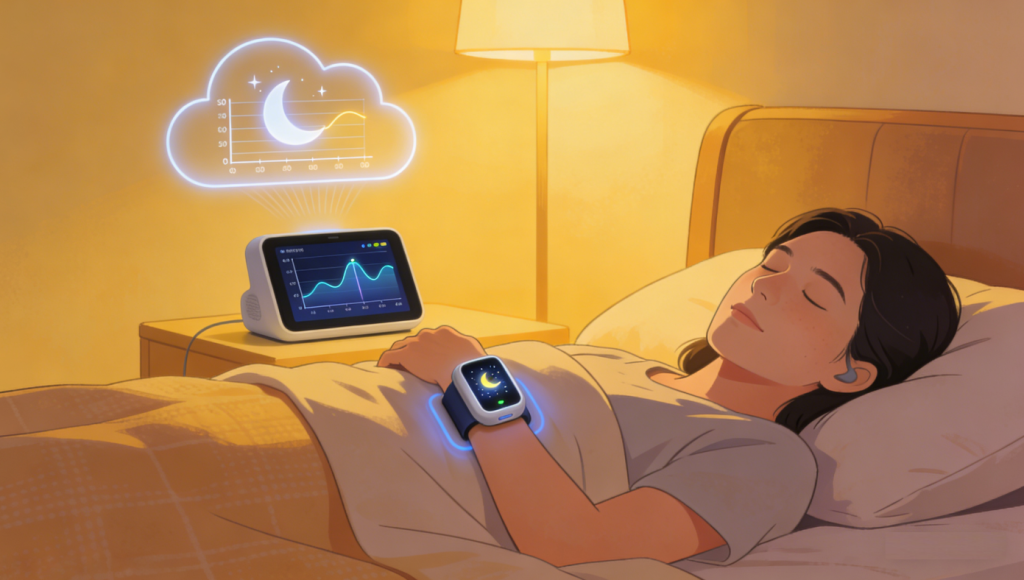
- Non-Wearable (Contactless) Sensors: Bedside devices like the Tanmi Smart Sleep Lamp use millimeter-wave radar and silicon-based yellow light technology to monitor sleep stages without physical contact—delivering 99.1% accuracy, comparable to clinical PSG (polysomnography) tests. These sensors detect subtle chest movements, breathing rate, and even heart rate from a distance, eliminating discomfort during sleep.
- Brainwave Monitoring: Medical-grade devices like the LumiSleep D1 use consumer-friendly EEG (electroencephalography) to track real-time brainwave activity, enabling personalized acoustic interventions that guide the brain into deeper sleep stages.
2. AI-Powered Analysis & Personalization 🤖
Modern sleep trackers don’t just collect data—they translate it into actionable habits:
- Sleep Stage Classification: AI algorithms analyze sensor data to identify light sleep, deep sleep, REM sleep, and wakefulness. Premium models (e.g., LumiSleep D1) reduce REM detection error by 30% compared to 2024 devices, providing more reliable insights into sleep quality.
- Pattern Recognition: Trackers learn user behavior over time, identifying triggers like late-night screen use or caffeine intake that correlate with poor sleep. For example, the Chaoxi (Tide) App flags patterns like “80% of your restless nights follow screen time after 10 PM.”
- Personalized Recommendations: Instead of generic advice, AI delivers tailored suggestions—such as adjusting bedtime by 30 minutes, using a specific white noise track, or practicing a 5-minute pre-sleep meditation—to address individual pain points.
- Anxiety Reduction Features: To combat the 17% of users who experience “sleep anxiety” from over-monitoring, top models like the Chaoxi App prioritize trend analysis over daily scores, avoiding stress from “inadequate deep sleep” labels.
3. Multi-Modal Sleep Intervention: From Monitoring to Improvement 🎧
2026 trackers integrate active interventions to bridge the gap between data and better sleep:
- Pre-Sleep Relaxation: Guided meditations, soft sleep stories, and layered white noise (ocean waves, rain, forest sounds) calm racing thoughts—key for those struggling to fall asleep. Apps like Calm offer celebrity-narrated stories with high production values, while Headspace provides structured meditation programs to build long-term relaxation habits.
- Smart Wake-Up: Instead of jarring alarms, trackers use “gentle wake” technology—gradually increasing sound or light during a 30-minute window when you’re in light sleep—to reduce morning grogginess. Some models sync with weather data to match wake-up sound intensity to outdoor conditions.
- Environmental Optimization: High-end trackers link to smart home ecosystems, automatically dimming lights, closing curtains, or adjusting room temperature as bedtime approaches. The Tanmi Smart Sleep Lamp, for example, triggers “sleep mode” for connected devices when it detects you’re preparing to sleep.
- Clinical-Grade Interventions: Devices like the LumiSleep D1 use real-time EEG feedback to deliver personalized acoustic stimulation, guiding the brain into deep sleep without disrupting rest.
4. Data Integration & Ecosystem Compatibility 🔗
- Cross-Platform Sync: All top trackers sync with Apple Health, Google Fit, and popular fitness apps (Strava, Fitbit), allowing users to correlate sleep data with activity, stress levels, and nutrition.
- User-Friendly Dashboards: Apps like Sleep Cycle and Xiao Sleep present data as easy-to-understand trends (weekly deep sleep percentage, monthly bedtime consistency) rather than overwhelming raw numbers.
- Multi-User Support: Family-friendly models like the Tanmi Smart Sleep Lamp allow up to 8 user profiles, with personalized insights for each family member—including dedicated modes for infants (baby sleep monitoring) and seniors (nighttime movement detection).
II. Top 6 Sleep Trackers of 2026 🏆
1. LumiSleep D1 EEG Sleep Tracker (Best Medical-Grade) ⭐
- Specs: Real-time EEG brainwave monitoring, millisecond acoustic intervention, 99.1% sleep stage accuracy, USB-C rechargeable (7-day battery), compatible with iOS/Android, compact bedside design.
- Key Features: Closed-loop sleep regulation (adjusts interventions based on brainwave activity), clinical-grade data analysis, no wearables required, integrates with Calm/Headspace for meditation content.
- Price: $3,499.99 (pre-order, launching Q3 2026).
- Pros: Most accurate consumer sleep tracker, effective for chronic insomnia, no physical discomfort, medical research-backed.
- Cons: Premium pricing, limited availability initially, requires 30-minute setup.
- Best For: Users with refractory insomnia (chronic sleep issues), those who’ve tried other trackers without success, and anyone prioritizing clinical-level accuracy.
2. Tanmi Smart Sleep Lamp (Best Contactless) 🛏️
- Specs: Millimeter-wave radar + silicon-based yellow light technology, 98.7% sleep stage accuracy, smart home integration (Alexa/Google Home), 10-day battery (USB-C), 8 user profiles, baby sleep mode.
- Key Features: Contactless monitoring (no wearables needed), automatic environmental adjustment (lights/curtains/temperature), sleep apnea risk screening, verified by Tongji University (25-minute deep sleep extension).
- Price: $199.99.
- Pros: Comfortable (no wristbands/rings), family-friendly, affordable for advanced features, long battery life.
- Cons: Requires placement 1-2 meters from bed, limited intervention options compared to dedicated apps.
- Best For: Families, users who dislike wearables, seniors, and those wanting seamless smart home integration.
3. Chaoxi (Tide) App + Xiaomi Band 9 Pro (Best Value Combo) 💰
- Specs: Xiaomi Band 9 Pro (PPG heart rate/SpO2/motion sensing, 14-day battery, IP68 waterproof); Chaoxi App (pre-sleep meditation, sleep stories, smart wake-up, free core features).
- Key Features: Full sleep cycle coverage (pre-sleep→sleep→wake), low-data-anxiety design, no subscription required for basic use, syncs with Apple Health/Google Fit.
- Price: $279.98 ($249.99 for Xiaomi Band + free Chaoxi App).
- Pros: Exceptional value, lightweight wearable, non-intrusive design, ideal for beginners, no hidden fees.
- Cons: Moderate accuracy (deep sleep error ~30%), limited advanced interventions.
- Best For: Budget shoppers, sleep tracker newcomers, urban professionals, and anyone seeking a balance of monitoring and basic intervention.
4. Oura Ring 4 (Best Wearable) 💍
- Specs: Titanium design (3.2g weight), PPG heart rate/HRV/SpO2 sensors, 7-day battery, sleep stage tracking, iOS/Android compatible, water-resistant (50m).
- Key Features: Discreet 24/7 wearability, comprehensive health metrics (sleep + activity + recovery), AI sleep coaching, integration with fitness apps.
- Price: $399.99 (no subscription required for core features).
- Pros: Comfortable for all-night wear, long battery life, combines sleep and activity tracking, durable material.
- Cons: Higher price than wristbands, less accurate than contactless/EEG models.
- Best For: Fitness enthusiasts, frequent travelers, users who prefer wearables over bedside devices, and those wanting holistic health tracking.
5. Hatch Restore 2 (Best for Sleep Routine Building) 🕯️
- Specs: Smart light + sound machine + sleep tracker, RGB light (warm amber for bedtime, natural white for wake-up), 1000+ soundscapes, Bluetooth/Wi-Fi, 8-hour battery (or plug-in), iOS/Android app.
- Key Features: Guided sleep routines (wind-down→sleep→wake), customizable light/sound schedules, gentle wake-up, integrates with Calm/Headspace.
- Price: $179.99.
- Pros: Builds consistent sleep habits, non-intrusive (no wearables), ideal for screen-time addicts, aesthetic design.
- Cons: Basic sleep tracking (no deep/REM breakdown), requires power source for full features.
- Best For: Users struggling with inconsistent bedtimes, those who want to reduce screen time before sleep, and anyone prioritizing sleep routine over detailed data.
6. Sleep Cycle App (Best Data-Focused App) 📊
- Specs: Patented sound analysis technology (uses phone microphone to track sleep stages), smart alarm, weekly/monthly trend reports, Apple Health/Google Fit sync, iOS/Android compatible.
- Key Features: No wearables or extra hardware needed, detailed sleep cycle graphs, correlation analysis (e.g., caffeine vs. sleep quality), free basic version.
- Price: Free (core features) / $29.99/year (premium: advanced analytics + ad-free).
- Pros: Zero setup cost, data-rich for an app-only solution, convenient (uses existing phone), no physical discomfort.
- Cons: Less accurate in noisy environments, requires phone on nightstand (1m from bed).
- Best For: Data enthusiasts, budget users who don’t want hardware, and anyone wanting to test sleep tracking before investing in a device.
III. Recommendations by Sleep Pain Point 🎭
1. Difficulty Falling Asleep (Insomnia) 😣
- Top Pick: Chaoxi App + Hatch Restore 2
- Why: Chaoxi’s pre-sleep meditation and sleep stories calm racing thoughts, while Hatch’s warm light wind-down routine signals the brain to prepare for sleep—together reducing sleep onset time by up to 42%.
2. Sleep Apnea Risk or Breathing Issues 😤
- Top Pick: Tanmi Smart Sleep Lamp + Sleep Cycle Premium
- Why: Tanmi’s radar technology monitors breathing patterns and flags sleep apnea risks, while Sleep Cycle’s sound analysis tracks snoring—providing actionable data for discussions with healthcare providers.
3. Inconsistent Sleep Schedules (Shift Workers/Travelers) ✈️
- Top Pick: Oura Ring 4 + Hatch Restore 2
- Why: Oura’s 24/7 tracking adapts to irregular schedules, while Hatch’s customizable routines help build consistency even with changing bedtimes—ideal for jet lag or shift work.
4. Data Anxiety (Overwhelmed by Metrics) 📉
- Top Pick: Chaoxi App (Free Version) + Tanmi Smart Sleep Lamp
- Why: Chaoxi’s low-data-anxiety design focuses on trends over daily scores, while Tanmi’s contactless monitoring eliminates the stress of “wearing” a tracker—perfect for users who want improvement without obsession.
5. Budget Constraints 💰
- Top Pick: Sleep Cycle App (Free) + Xiaomi Band 9 Pro
- Why: Sleep Cycle’s free version offers basic tracking, while Xiaomi Band 9 Pro adds accurate heart rate/SpO2 monitoring for under $250—delivering value without sacrificing core features.
6. Baby/Child Sleep Monitoring 👶
- Top Pick: Tanmi Smart Sleep Lamp + Xiao Sleep App
- Why: Tanmi’s baby mode tracks infant sleep patterns without disturbing them, while Xiao Sleep’s dedicated baby lullabies and white noise help soothe fussy sleepers.
IV. How to Choose the Right Sleep Tracker 🛒
1. Identify Your Core Sleep Pain Point
- Sleep Onset Insomnia (Trouble Falling Asleep): Prioritize pre-sleep interventions (meditation, soundscapes) → Chaoxi App, Hatch Restore 2.
- Sleep Maintenance Insomnia (Frequent Night Waking): Look for night-time monitoring and gentle interventions → LumiSleep D1, Oura Ring 4.
- Poor Sleep Quality (Tired After 8 Hours): Focus on deep/REM tracking and personalized recommendations → Tanmi Smart Sleep Lamp, Oura Ring 4.
- Inconsistent Schedules: Choose flexible trackers with routine-building features → Hatch Restore 2, Oura Ring 4.
2. Choose Your Monitoring Type
- Wearable: Ideal for travelers, fitness enthusiasts, and those who want 24/7 health tracking → Oura Ring 4, Xiaomi Band 9 Pro.
- Contactless (Bedside): Best for comfort seekers, families, and users who dislike wearables → Tanmi Smart Sleep Lamp, Hatch Restore 2.
- App-Only: Perfect for budget users, data casuals, and anyone wanting to test sleep tracking → Chaoxi App, Sleep Cycle.
3. Evaluate Accuracy & Data Depth
- Medical-Grade Accuracy: For chronic sleep issues → LumiSleep D1 (99.1% accuracy).
- Balanced Accuracy & Usability: For most users → Tanmi Smart Sleep Lamp (98.7%), Oura Ring 4 (~70-80% for deep/REM).
- Basic Accuracy (Good Enough for Trends): For beginners → Chaoxi App, Sleep Cycle.
4. Prioritize Key Features
- Interventions: Meditation, soundscapes, smart wake → Chaoxi App, Hatch Restore 2.
- Data Analysis: Trend reports, correlation tools → Sleep Cycle Premium, Oura Ring 4.
- Smart Home Integration: Environmental control → Tanmi Smart Sleep Lamp, Hatch Restore 2.
- Family/Baby Support: Multi-user profiles, infant modes → Tanmi Smart Sleep Lamp, Xiao Sleep App.
5. Set a Realistic Budget
- Entry-Level ($0-$50): App-only solutions (Chaoxi Free, Sleep Cycle Free) → no hardware cost.
- Mid-Range ($50-$200): Wearables (Xiaomi Band 9 Pro) or bedside devices (Hatch Restore 2) → balance of features and price.
- High-End ($200-$500): Premium wearables (Oura Ring 4) or advanced contactless trackers (Tanmi Smart Sleep Lamp) → top-tier accuracy and features.
- Medical-Grade ($3,000+): EEG devices (LumiSleep D1) → for chronic insomnia or clinical-level monitoring.
6. Avoid Common Pitfalls
- Data Overload: Choose trackers that prioritize simplicity (Chaoxi App) over raw data if you’re prone to anxiety.
- Wearable Discomfort: Opt for contactless trackers (Tanmi) if wristbands/rings bother you at night.
- False Promises: No consumer tracker matches clinical PSG—focus on trends, not perfect daily scores.
- Subscription Traps: Look for devices with free core features (Oura Ring 4, Chaoxi App) to avoid recurring costs.
Conclusion
2026’s sleep trackers have evolved from passive data collectors to active sleep improvement tools, leveraging AI, advanced sensing, and personalized interventions to address the root causes of poor sleep. Whether you’re a chronic insomniac, a busy professional struggling with inconsistent schedules, or a parent monitoring a baby’s sleep, there’s a tracker tailored to your needs—from the medical-grade LumiSleep D1 to the budget-friendly Chaoxi App + Xiaomi Band combo.
The key to choosing the right tracker lies in identifying your specific sleep pain point, balancing accuracy with usability, and avoiding the trap of “more data = better sleep.” The most effective sleep trackers don’t just tell you how you slept—they guide you to sleep better, building sustainable habits that improve energy, focus, and long-term health.
By integrating a sleep tracker into your routine, you’re not just investing in a tech gadget—you’re investing in your most valuable asset: quality sleep. With the right tool, you can turn restless nights into restful ones, transforming your sleep habits and unlocking a healthier, more vibrant life.
About the Author