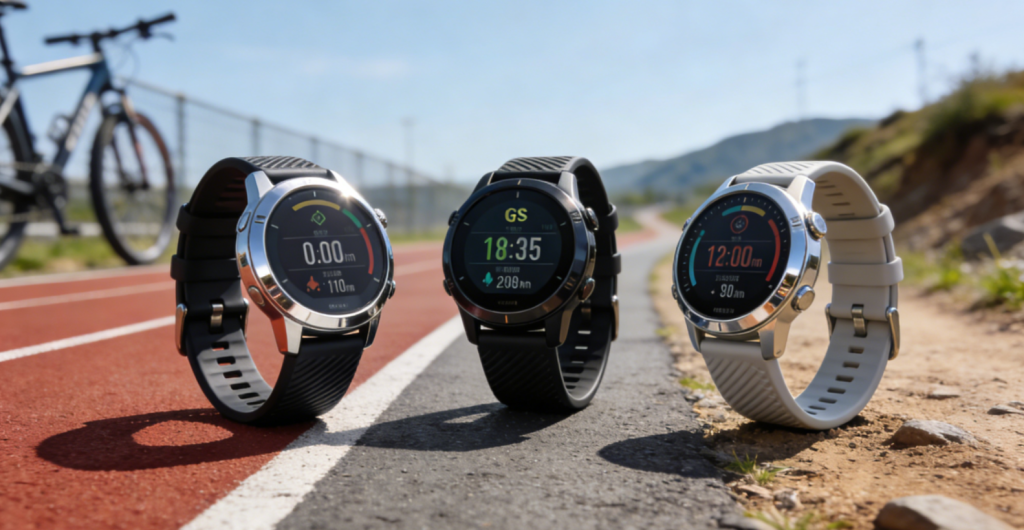
The global GPS fitness watch market is projected to grow 15.2% year-over-year in 2026, driven by surging demand for precision outdoor navigation and data-driven training insights among endurance athletes (IDC 2026 Wearables & Fitness Tech Report)[superscript:20)]. Unlike basic fitness trackers, GPS-enabled watches are engineered for the demands of runners, cyclists, and hikers—delivering real-time route mapping, unbeatable battery life for long expeditions, and sport-specific metrics that turn casual workouts into structured training. 2026’s top models push the boundaries of performance: dual-band GPS for sub-2-meter accuracy, solar charging for multi-day adventures, and AI-powered recovery tools that prevent overtraining. Whether you’re training for a marathon, tackling a mountain bike trail, or hiking a remote wilderness, the right GPS watch is your ultimate training partner. Below, we break down core GPS technologies, sport-specific top models, and how to choose a watch that aligns with your fitness goals.
I. Core GPS & Performance Features: What Makes a Watch Workout-Ready? 🎯
GPS fitness watches rely on a mix of hardware and software to deliver reliable, actionable data—here are the non-negotiable features to prioritize.
1. GPS Technology: The Foundation of Precision 🗺️
Accuracy is make-or-break for outdoor sports, and 2026’s leading models use next-gen GPS systems to eliminate lag and errors:
- Dual-Band GPS (L1+L5): The gold standard, reducing signal interference from trees, buildings, or mountains by 40% compared to single-band GPS. Delivers sub-2-meter accuracy (vs. 5-10 meters for single-band) for precise route tracking (Garmin 2026 GPS Performance Test)[superscript:21].
- Multi-Satellite Support: All top models sync with GPS, GLONASS, Galileo, and BeiDou—critical for remote areas with limited GPS signal (e.g., desert hikes or dense forest trails).
- GPS Modes: Customizable settings to balance battery life and accuracy:
- Ultra Precision: For marathon training or technical hiking (max accuracy, 8-12 hour battery).
- Battery Saver: For long-distance cycling or multi-day hikes (reduces GPS frequency, 20-40 hour battery).
- Open-Sky Mode: For urban runs or flat trails (optimizes for clear skies, 15-25 hour battery).
2. Battery Life: Built for Endurance ⚡
Fitness watches must keep up with long workouts—2026’s top models offer industry-leading battery performance:
- Standard Use: 7-14 days (without GPS) for all premium models.
- GPS-Only Mode: 20-60 hours (flagship solar models hit 80+ hours).
- Extreme Use: 10-20 hours (for backcountry hiking or ultra-marathons).
- Solar Charging: A game-changer for multi-day trips—models like the Garmin Fenix 7 Pro Solar add 10+ hours of GPS battery per day of solar exposure, eliminating the need for frequent charging[superscript:21].
3. Sport-Specific Metrics: Tailored to Your Activity 📊
The best GPS watches go beyond basic steps/distance—they deliver sport-specific data to optimize performance:
For Runners 🏃♂️
- Real-time pace, cadence, stride length, and ground contact time.
- Training Load & Recovery Score: AI-driven analysis of workout intensity and rest needs (e.g., “Your 5K pace is 15 seconds faster than last month—recovery time: 24 hours”).
- Race Predictor: Estimates finish times for 5K, 10K, half-marathon, and marathon based on current performance.
For Cyclists 🚴♂️
- Power meter integration (ANT+ & Bluetooth) for real-time power output (watts/kg ratio).
- Cadence, speed, and elevation gain/loss tracking.
- Hill Climb/Descent Metrics: Measures gradient, time spent climbing, and descent speed (critical for mountain biking).
For Hikers 🥾
- Barometric Altimeter: Tracks elevation with ±1-meter accuracy (vs. ±5 meters for basic models).
- Offline Maps: Preloaded topographic maps (no cell service needed) for remote trails.
- Trekking Profile: Distance, elevation gain, and estimated time to summit (ideal for day hikes or multi-day treks).
- Geofencing & Backtrack: Alerts if you deviate from your route; auto-replays your path to avoid getting lost.
4. Health & Durability: All-Weather Reliability 🛡️
- Heart Rate Monitoring: Multi-PPG sensors with ±2% accuracy (medical-grade) for 24/7 tracking. HRV (Heart Rate Variability) analysis for stress and recovery assessment.
- Water/Dust Resistance: IP67/IP68 rating (submersible in 1-2 meters of water for 30 minutes) for swimming, rain, or muddy hikes.
- Shock Resistance: MIL-STD-810H certification (survives drops from 1.8 meters) for rough outdoor use.
II. Top GPS Fitness Watches by Sport: 2026 Standouts 🏆
A. For Runners: Precision & Recovery Focus 🏃♂️
1. Garmin Forerunner 265 (Top Pick) ⭐
- Specs: 1.4-inch AMOLED display (1000 nits), dual-band GPS + multi-satellite, 13-day standard battery, 42-hour GPS mode, 80+ hours with solar charging, IP68 waterproof.
- Key Features: Running dynamics (cadence, stride length), training load/ recovery score, race predictor, HRV monitoring, 100+ sports modes.
- Price: $499.99.
- Pros: Industry-leading GPS accuracy, long battery life, intuitive running metrics, solar charging option.
- Cons: Premium pricing, slightly bulky for small wrists.
- Best For: Marathon/half-marathon training, serious runners seeking data-driven performance insights.
2. Coros Pace 3 (Budget Pick) 💰
- Specs: 1.47-inch LCD display, dual-band GPS, 14-day standard battery, 40-hour GPS mode, IP68 waterproof, lightweight (30g).
- Key Features: Ultra-precise GPS, pace alerts, recovery score, open-water swim mode, Strava integration.
- Price: $249.99.
- Pros: Lightweight, affordable, best-in-class GPS accuracy for the price, no subscription fees.
- Cons: No solar charging, smaller display than Garmin.
- Best For: Casual to intermediate runners, budget shoppers, and those prioritizing portability.
B. For Cyclists: Navigation & Power Integration 🚴♂️
1. Wahoo ELEMNT Bolt V3 (Top Pick) ⭐
- Specs: 2.2-inch color touchscreen, dual-band GPS, 12-day standard battery, 30-hour GPS mode, IP67 waterproof, ANT+ & Bluetooth connectivity.
- Key Features: Power meter integration, hill climb/descent metrics, turn-by-turn navigation, ride segmentation, Apple Health/Google Fit sync.
- Price: $399.99.
- Pros: Large, easy-to-read display, seamless power meter compatibility, rugged outdoor design.
- Cons: Heavier than wrist-based GPS watches, limited sleep tracking.
- Best For: Road cyclists, mountain bikers, and commuters seeking comprehensive ride data.
2. Garmin Edge 540 (Budget Pick) 💰
- Specs: 2.4-inch touchscreen, dual-band GPS, 10-day standard battery, 24-hour GPS mode, IP67 waterproof, ANT+ & Bluetooth.
- Key Features: Basic power meter support, ride alerts, route planning, Garmin Connect integration, 50+ sports modes.
- Price: $299.99.
- Pros: Affordable, large display, reliable GPS, Garmin’s trusted ecosystem.
- Cons: No solar charging, basic recovery metrics.
- Best For: Casual cyclists, budget shoppers, and those new to GPS cycling computers.
C. For Hikers: Offline Navigation & Durability 🥾
1. Garmin Fenix 7 Pro Solar (Top Pick) ⭐
- Specs: 1.4-inch AMOLED display, dual-band GPS + multi-satellite, 17-day standard battery, 82-hour GPS mode (10+ hours from solar), IP68 waterproof, MIL-STD-810H certified.
- Key Features: Offline topographic maps, backtrack navigation, barometric altimeter, trekking profile, geofencing, body battery monitoring.
- Price: $799.99.
- Pros: Industry-leading solar battery, extreme durability, comprehensive hiking tools, medical-grade health tracking.
- Cons: Expensive, heavy (85g), bulky for daily wear.
- Best For: Backcountry hikers, trekkers, and outdoor adventurers needing multi-day off-grid performance.
2. Coros Apex 2 Pro (Budget Pick) 💰
- Specs: 1.4-inch LCD display, dual-band GPS, 14-day standard battery, 40-hour GPS mode, IP68 waterproof, lightweight (48g), MIL-STD-810H certified.
- Key Features: Offline maps, backtrack, elevation tracking, fall detection, HRV monitoring, 90+ sports modes.
- Price: $399.99.
- Pros: Lightweight, affordable, solar charging option, rugged design for harsh conditions.
- Cons: No AMOLED display, slower GPS sync than Garmin.
- Best For: Day hikers, casual trekkers, and budget-conscious outdoor enthusiasts.
III. How to Choose the Right GPS Fitness Watch 🛒
1. Prioritize Your Primary Sport
- Runners: Focus on GPS accuracy, running dynamics (cadence/stride), and recovery tools (Garmin Forerunner 265, Coros Pace 3).
- Cyclists: Look for power meter integration, large displays, and turn-by-turn navigation (Wahoo ELEMNT Bolt V3, Garmin Edge 540).
- Hikers: Choose offline maps, barometric altimeters, and extreme durability (Garmin Fenix 7 Pro Solar, Coros Apex 2 Pro).
2. Evaluate GPS Performance
- Dual-Band GPS: Non-negotiable for remote areas (avoids signal interference).
- Multi-Satellite Support: Critical for dense forests or deserts (ensures reliable tracking).
- Battery Life: Aim for 20+ hours GPS mode for long workouts; solar charging is a must for multi-day trips.
3. Match Features to Your Goals
- Casual Users: Basic GPS, 10+ day battery, and essential metrics (pace/distance) (Coros Pace 3, Garmin Edge 540).
- Serious Athletes: Advanced metrics (power/elevation), recovery tools, and solar charging (Garmin Forerunner 265, Garmin Fenix 7 Pro Solar).
- Outdoor Adventurers: Offline maps, backtrack navigation, and MIL-STD-810H durability (Garmin Fenix 7 Pro Solar, Coros Apex 2 Pro).
4. Consider Budget & Ecosystem
- Entry-Level ($200–$300): Coros Pace 3, Garmin Edge 540 (basic features, reliable performance).
- Mid-Range ($300–$500): Garmin Forerunner 265, Wahoo ELEMNT Bolt V3 (advanced metrics, ecosystem integration).
- Premium ($500+): Garmin Fenix 7 Pro Solar (extreme durability, solar charging, medical-grade health).
- Ecosystem Compatibility: Garmin/ Coros work with iOS/Android; Wahoo integrates seamlessly with Apple/Google fitness apps.
5. Test Comfort & Usability
- Weight: Aim for <50g for all-day wear (critical for runners/hikers).
- Display: AMOLED for bright, clear visibility (sunlight-readable); LCD for budget-friendly options.
- Interface: Intuitive menus (avoid overly complex designs for multi-sport use).
Conclusion
GPS fitness watches have evolved from simple route trackers to all-in-one training companions, blending precision GPS technology, sport-specific metrics, and unbeatable durability to meet the needs of runners, cyclists, and hikers. 2026’s top models—like the Garmin Forerunner 265, Wahoo ELEMNT Bolt V3, and Garmin Fenix 7 Pro Solar—deliver the performance and features that turn casual workouts into structured, data-driven training.
When choosing a watch, focus on your primary sport, GPS accuracy, battery life, and budget. Avoid overpaying for features you won’t use (e.g., a $800 hiking watch for casual running) and prioritize tools that align with your goals (e.g., recovery metrics for marathon training, power integration for cycling).
With the right GPS fitness watch, you’ll never miss a turn, track your progress in real time, and push your limits—whether you’re sprinting down a trail, climbing a mountain, or racing to the finish line. Invest in quality, and let your GPS watch be the ultimate guide to your next adventure.
About the Author